NEWS · WASHINGTON, D.C.
The Pentagon’s seventh UFO release leads with a silent black triangle seen by federal agents
The Department of War published 28 more UAP records on October 23, with no videos. The headline file is an AARO memo about a triangle that two federal agents say rose, hovered and dived into a canyon.
On Friday, October 23, the Department of War published the seventh release of files under PURSUE, its program for releasing UAP records. In a statement attributed to chief Pentagon spokesman Sean Parnell and carried by MilitarySpot, the department said it “will release additional files on a rolling basis” and that it and its agency partners are “actively working on the next release.” The new batch arrived 35 days after the sixth, on September 18.
By the Pentagon’s own file list it holds 28 documents and, unlike earlier releases, no videos, which brings the archive to 478 files in seven releases. The lead item is a pair of records about a black triangle that two federal agents say they watched at a sensitive site in the western United States. You can browse every file in the release on this site, each with our own write-up.
The black triangle
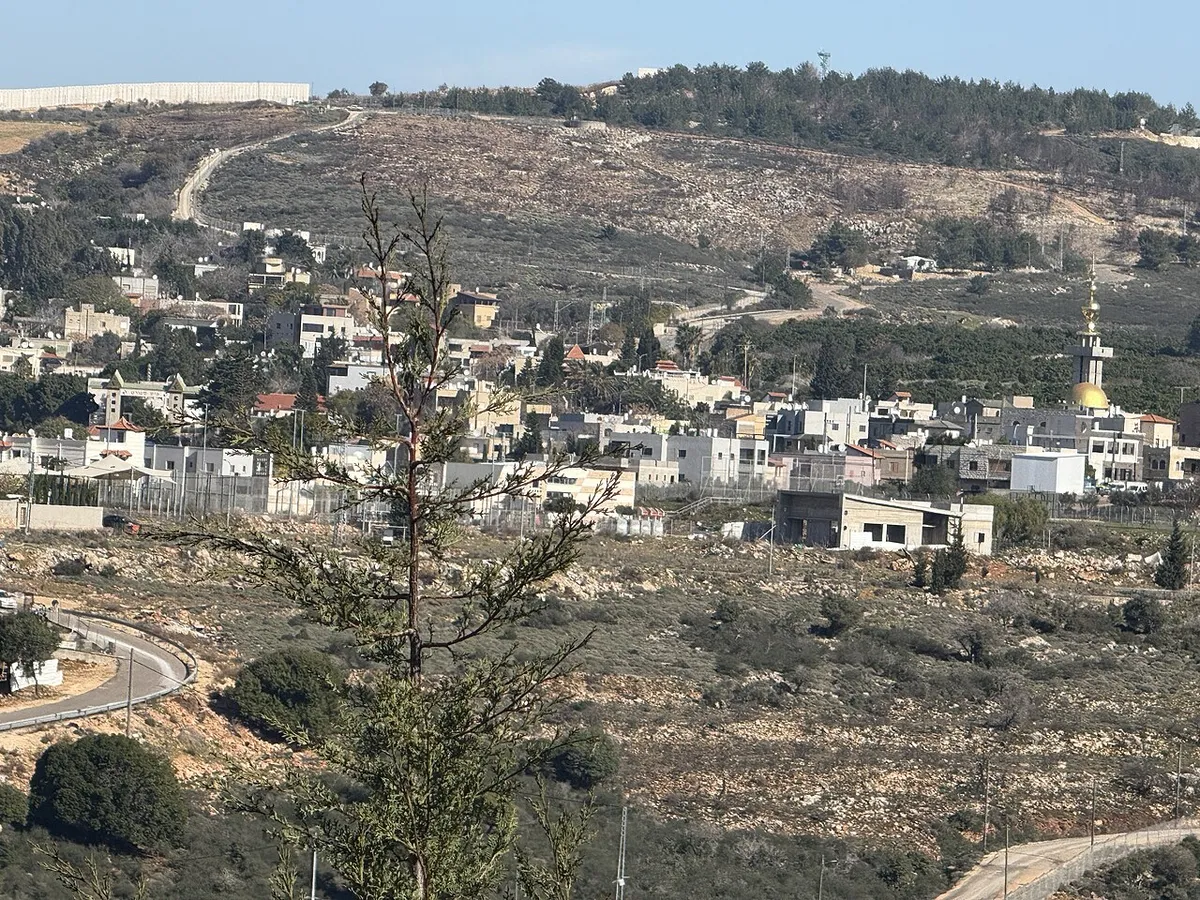
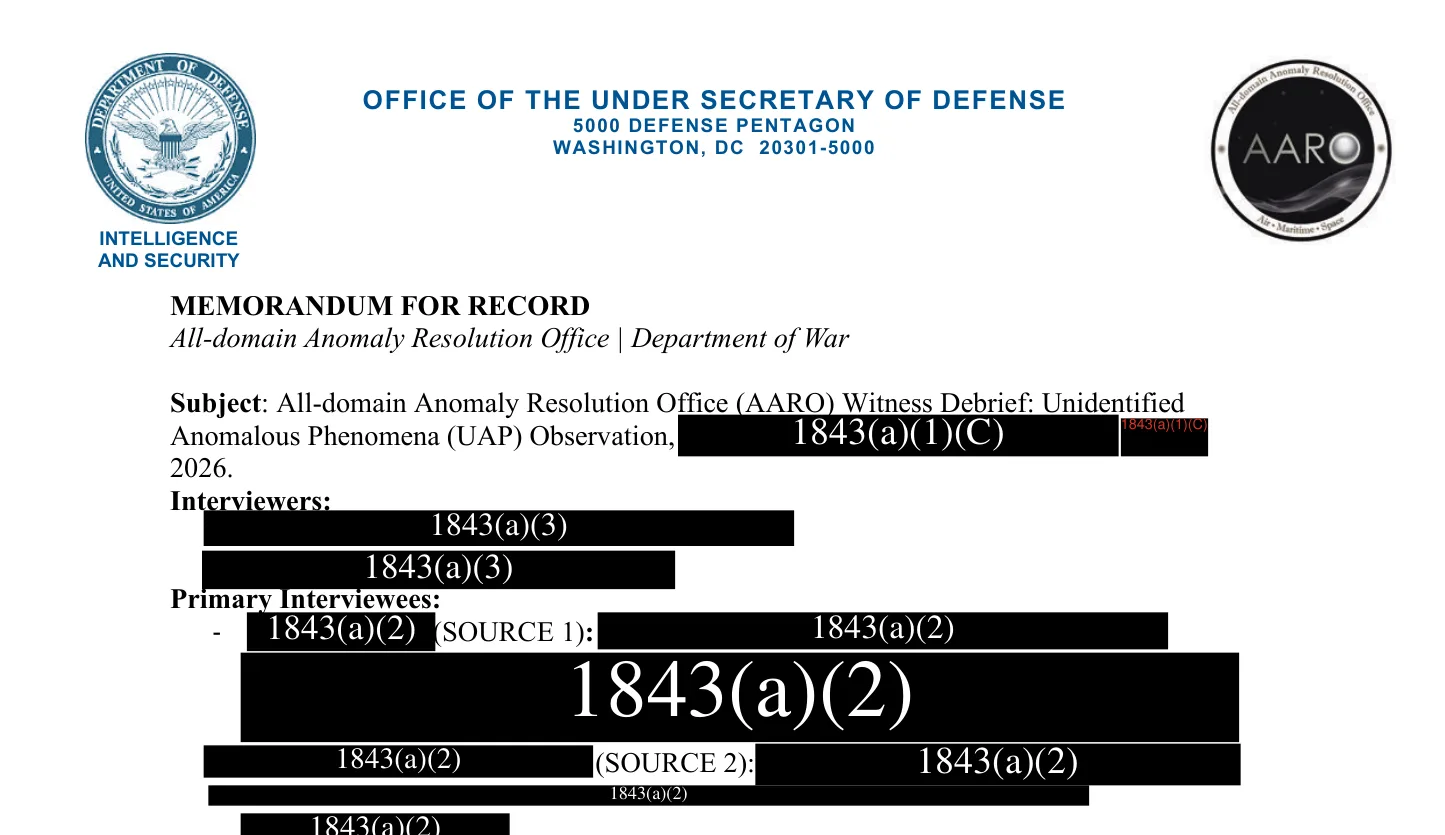
The first record is a three-page memorandum by the Pentagon’s All-domain Anomaly Resolution Office, DOW-UAP-D176. It records a debrief of two federal special agents, with a third official as a corroborating witness at a separate observation post. Their names, the site and the exact day are blacked out; the release dates the event to June 2026. In its description of the file, AARO says the incident warrants further investigation because the object’s shape and movements resemble other reports from the western United States.
According to the memo, the object appeared at about 8:23 p.m. local time, in late dusk. For roughly ten seconds a matte black, very thin triangle, estimated at 13 to 15 feet across, climbed straight up to 200–300 feet above a ridge. It hovered for about twenty seconds, then banked and dropped into a canyon in two to three seconds. The agents compared its speed to a fighter jet’s; no instrument measured it. They heard nothing, and a handheld thermal monocular showed a uniform thermal signature with no exhaust or hot spots. A search of the canyon the next morning found no wreckage or ground marks, the memo says.
Where the two records disagree
The second record is the FBI’s FD-302, FBI-UAP-D043, which reproduces the agents’ own written statement. It does not match the AARO memo on several points. The statement puts the first detection at about 7:23 p.m. (1923 hours), gives the width as nine to fifteen feet, and describes the object as “most resembling a delta wing drone.” It says the whole sighting lasted “approximately three seconds” and mentions no hover, while the three phases in AARO’s memo add up to more than half a minute. The FBI form carries the usual line that it contains “neither recommendations nor conclusions.”
Neither document identifies the object. AARO’s memo opens with a caution that its descriptions are the witnesses’ interpretations, not proof of any feature or performance. It does record an argument against the obvious explanation: the agents work around drones, and the agents told AARO that even a small quadcopter or a helicopter would have been clearly audible from their hilltop at 1.4 miles, the near end of the memo’s range estimate. Their own written statement, though, puts the ridge about 3.2 miles away and refers to the object as “the unmanned aerial system.” A drone remains the ordinary candidate, but nothing in the release identifies a specific one.
The rest of the release
Nine files come from the Bigelow Aerospace Advanced Space Studies work for the Defense Intelligence Agency’s AAWSAP program, which we covered earlier. The best known is an April 2010 report on a Utah ranch, DOW-UAP-D174. The ranch’s name is redacted, though Axios linked the file to Skinwalker Ranch. Its team interviewed more than 25 people about creatures and lights, and a laboratory found that hair pulled from a fence after a reported “Skinwalker” chase was from a dog, most likely the same dog BAASS sampled as a control; another hair, stuck to a rock, was from a raccoon.
Ten Air Force reports from the 1950s are here, among them a B-52 crew’s unidentified return on its gunnery radar over Saudi Arabia (D155) and a Swedish airline captain’s sighting (D163). Four more come from Catalina Island, California, between 1949 and 1955, including three Boy Scouts’ 1952 report. The release adds 1962–64 memos on handling space-vehicle fragments, and the personnel record of Col. Howard McCoy, an Air Force intelligence chief in the Project Sign and Grudge years. Publishing a file does not mean it shows anything anomalous, and the release reaches no conclusion about extraterrestrial origin.
Sources
- U.S. Department of War: Pentagon UFO files, Release 7 (WAR.GOV/UFO), October 23, 2026
- MilitarySpot: DoW Publishes Seventh Release of UFO Files (Parnell statement), October 23, 2026
- Axios (via Yahoo News): Mysterious “flying triangle” sighting leads new government release of UFO documents, October 23, 2026
- Anadolu Agency: Pentagon releases 7th batch of UFO files, October 23, 2026