UNCLASSIFIED // PUBLIC RECORDSENSOR FOOTAGE
OFFICIAL VIDEO · USS THEODORE ROOSEVELTThe GIMBAL UFO Video (2015)
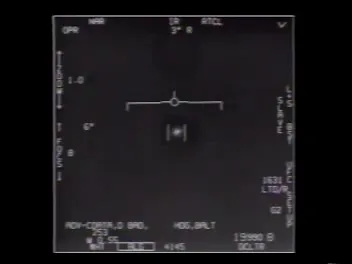
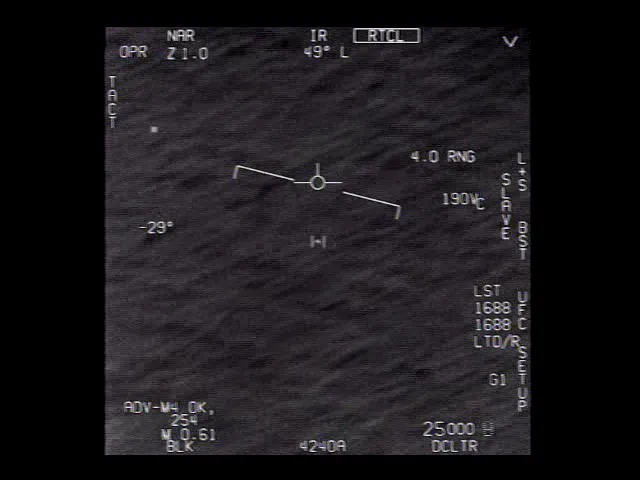
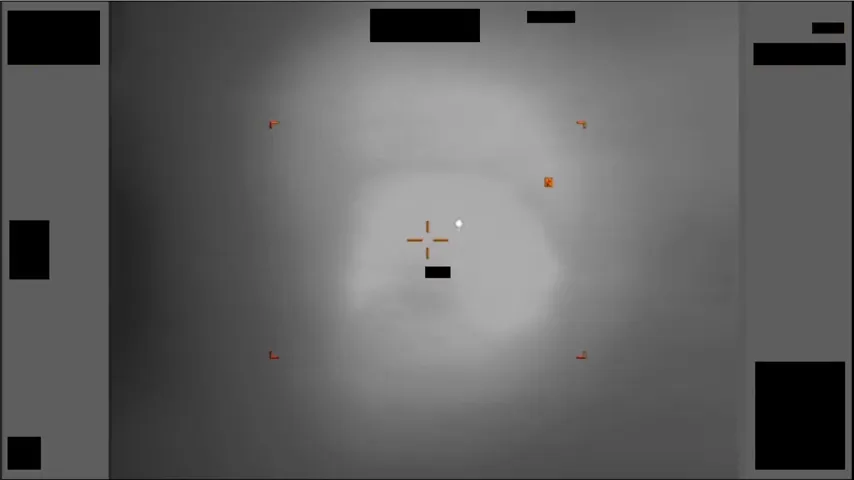
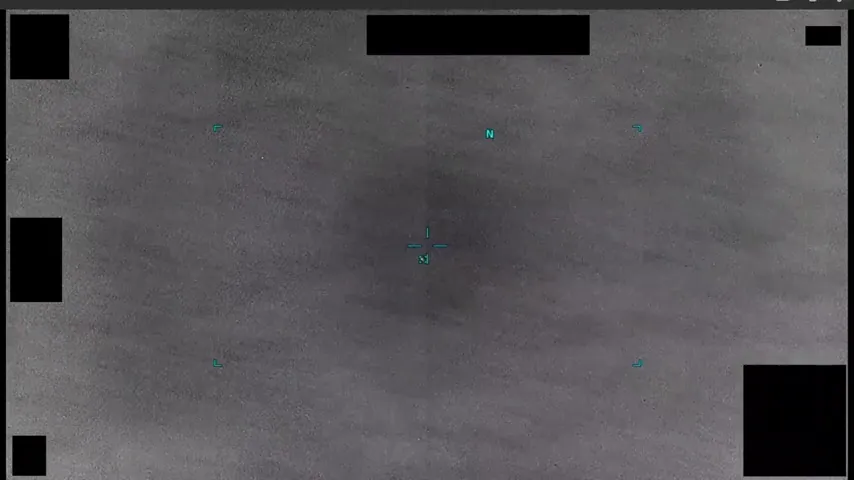
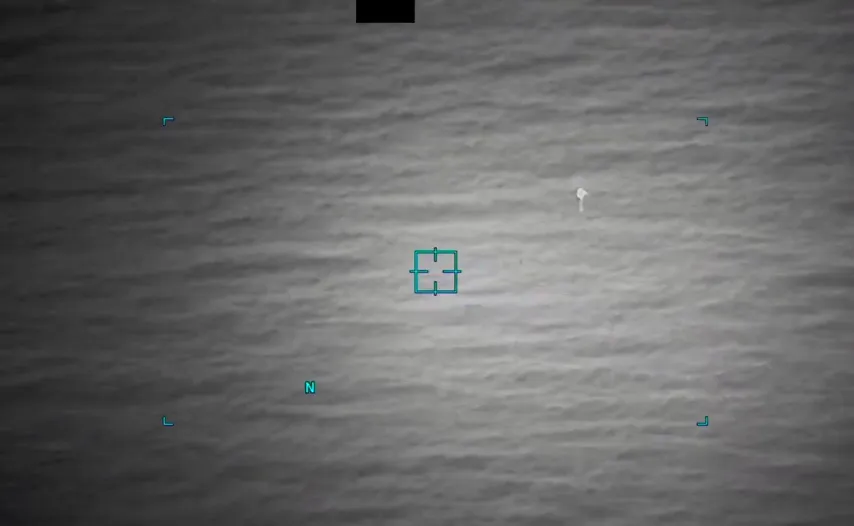
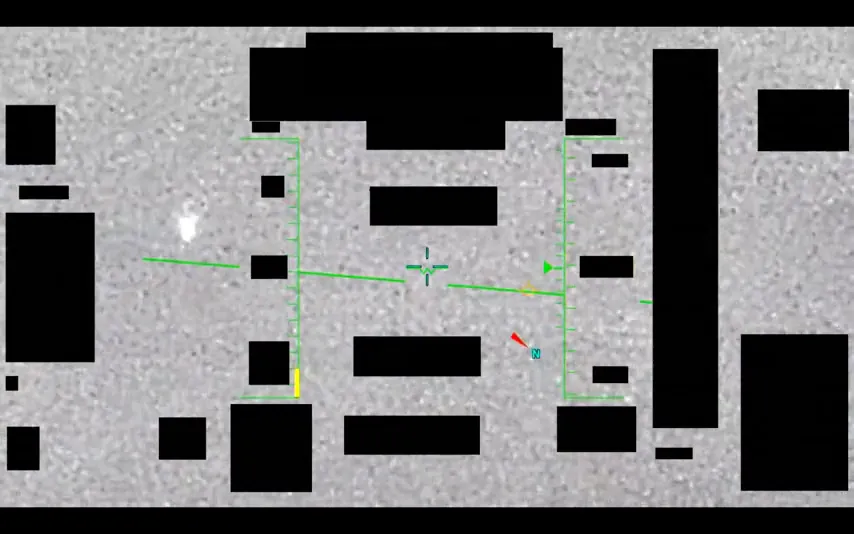
GIMBAL was recorded in January 2015 by a U.S. Navy F/A-18 Super Hornet crew from the USS Theodore Roosevelt carrier strike group, training off the U.S. East Coast. It was captured with the jet’s infrared targeting pod and is known by its Navy file name. A gimbal is the rotating mount that lets such a camera swivel to keep a target in view, a detail that sits at the center of later debate about the clip.
The black-and-white infrared image shows a dark, elongated shape wrapped in a glowing halo, above a layer of cloud. As the camera tracks it, the shape appears to tilt and then rotate. The aircrew can be heard reacting; The New York Times, which published the video in December 2017, reported one exclaiming, ‘There’s a whole fleet of them.’ Asked in 2023 about how the clip ends, former Navy pilot Ryan Graves said the object ‘seemed to rock a bit’.
Graves told the House in July 2023 that when the 2017 story appeared he ‘recognized the voices on the video’ and had seen it when it was debriefed. In September 2019 the Navy said it considered the phenomena in GIMBAL and two other videos ‘unidentified’. On April 27, 2020, the Department of Defense formally released the three clips, saying the release did not sensitive capabilities and that the phenomena remained unidentified.
Mick West has argued the most likely explanation is a camera artifact: an infrared glare from a hot source, ‘rotating only because the camera rotates when tracking the target from left to right’. He suggests the source could be something mundane, such as ‘a distant small jet, just flying away’. Critics dispute parts of his model. Graves has said the most useful evidence would be radar data that ‘would provide precise kinematics on the object’.
GIMBAL is arguably the most debated of the three Navy videos because its key feature, the apparent rotation, can be tested against the known behavior of the camera system. That makes it a frequent reference point in arguments over how far sensor artifacts can explain military UAP footage. Officially, the Pentagon has not offered an identification, and it remains one of the three videos the department released as ‘unidentified’.
Sources
- Original file on Wikimedia Commons
- Department of Defense statement on the release of three Navy videos, April 27, 2020 (archived)
- Naval Air Systems Command FOIA reading room (official GIMBAL and GOFAST files)
- Metabunk: Mick West, ‘Gimbal UFO – A New Analysis’
- GovInfo: House Oversight hearing transcript, July 26, 2023 archived