NEWS · LEVELLAND, TEXAS
Levelland, 1957: what the Air Force’s own file says about the Texas car-stalling UFO, and why its storm explanation is still disputed
On the night of November 2–3, 1957, motorists near Levelland reported glowing objects and dead engines. The Air Force’s file blames ball lightning, a wet night and, in one truck, a faulty part. Critics say the storm claim doesn’t hold.
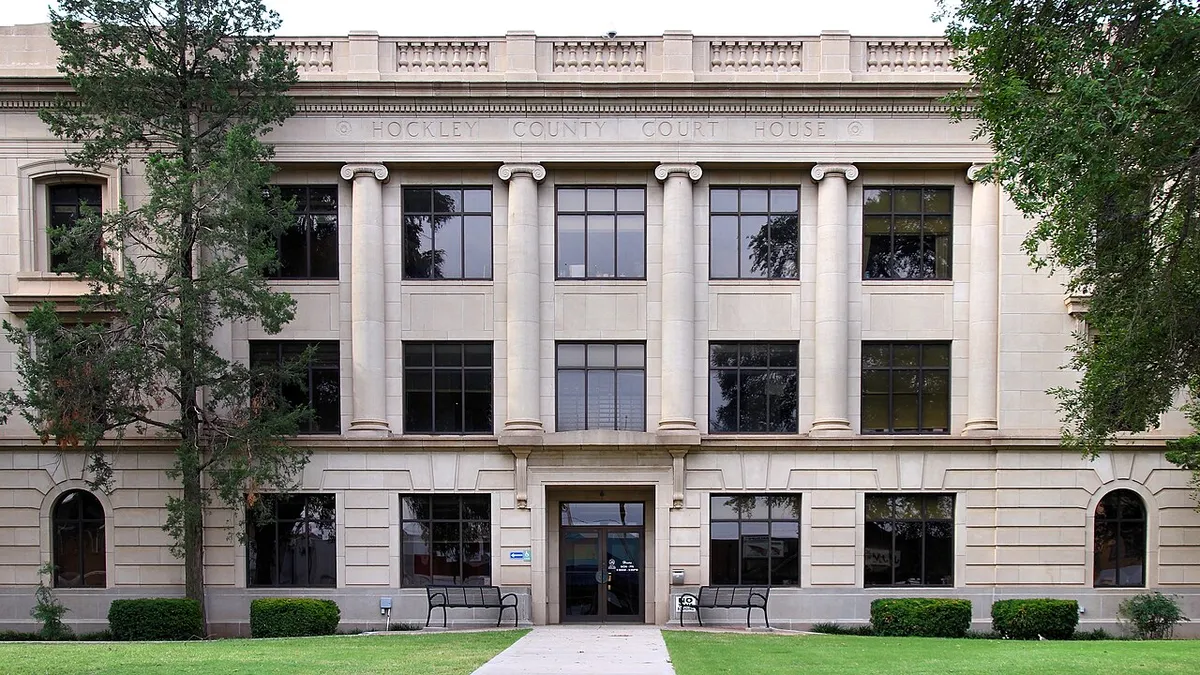
On the night of November 2–3, 1957, drivers on the roads around Levelland, Texas, a High Plains town, began reporting a glowing object that sat on or above the road ahead of them. Several said their engines and headlights died as it neared and came back to life after it left. The reports came in over a few hours. The Air Force soon settled on ball lightning. Sixty-nine years on, its file on the case is public: a scan of the Project Blue Book record, posted online by The Black Vault. We read it, and here is what it says, set beside what witnesses and later critics said.
What witnesses reported
The accounts differ on exact times and places, but they agree on the outline. According to a 1960 talk by astronomer J. Allen Hynek, Pedro Saucedo and a companion, Joe Salaz, saw a torpedo- or rocket-shaped object, about 200 feet long, near the road outside town. Saucedo said his truck rocked from the blast. The two phoned police from a town ten miles away, and the officer on duty did not at first take the report seriously.
About an hour later, Jim Wheeler reported a blazing, egg-shaped object sitting on the road, and said his lights went out and his motor died. Newell Wright, a Texas Technological College student, reported a flat-bottomed oval object at about 12:05 a.m. on November 3. James Long described an egg-shaped mass that glowed like a neon sign and shot straight up. Hockley County Sheriff Weir Clem, by Patrick Gross’s account, heard so many reports that he drove out with a deputy at about 1:30 a.m. and saw a large oval red light, though his own car’s electrical system was not affected.
What the Air Force file says
The file opens with the Project 10073 record card (ATIC Form 329). It logs the sighting as civilian, ground-visual, “3 seconds to 4 mins,” and ticks the conclusion “Other: Ball lightning.” Its summary says the case “triggered off more than 300 similarly described reports within a 6 day period because of the nation-wide publicity and sensationalism given by the press, radio and TV.” The comments box says that after “very extensive checks and detailed investigations,” including collaboration with Air Force and non-governmental scientists, the Air Force concluded the sighting was “due to a very rare phenomena, ball lightning.”
Behind the card are the working papers. A message dated November 7, 1957, from the commander of an Air Force intelligence squadron to Air Force headquarters and the Air Technical Intelligence Center (ATIC) lists the sources the investigator questioned, including Wright and Clem, each graded for reliability, with other names blacked out. It says three of the blacked-out sources were the only ones to report the object landing and the only ones who watched it for more than a few seconds. It then lists the investigator’s possible explanations: that “with amount of rain in area,” conditions might have developed to bring about St. Elmo’s fire; burning gas from oil operations reflecting off a 400-foot cloud cover; or a downed power line sparking off wet ground. A Texas Tech astronomer it quotes agreed with the first two. Another message says a press release had also mentioned a farmer in the area whose truck lost power around the time of the sighting. The investigation found, it says, that a rotor had been changed on the truck the day before and a piece of the old rotor, left behind, had wedged between the points and disabled the electrical system, according to the mechanic. Another message says the provost marshal at Reese Air Force Base, Maj. Daniel R. Kester, visited the alleged scene with local civil authorities, with “negative results.”
A summary page gives the weather: overcast, a drizzle or light rain throughout, and an area that “had been subjected to heavy thunderstorms just prior to the sightings.” It concludes the sightings were probably due to ball lightning, with stalled cars attributed to moisture on distributor parts, “especially if moisture condensation nuclei were enhanced by increased atmospheric ionization,” and adds that in one instance a faulty distributor was found to be the cause. The project’s analyst, Capt. George T. Gregory, who signs another memo in the file as “UFO Project Officer,” wrote on January 3, 1958 that the phenomenon was “undoubtedly related to the meteorological conditions”: fog, light rain, mist, a ceiling of 400 feet and lightning discharges, “definitely established through the results of numerous investigative reports.” He added that nearby oil fires probably contributed, and conceded that ball lightning is “a field, of which very little is known.” A partly legible handwritten note on that page says the case was sent to Hynek for independent review.
Why the explanation is disputed
The weather is the crux. James McDonald, an atmospheric physicist who studied the case, is quoted on Gross’s page as saying “there were no thunderstorms anywhere close to Levelland that night,” and told Congress in 1968 there was “only a trace of rain,” as Wikipedia quotes his testimony. Astronomer Donald Menzel took the opposite view, citing rain, thunderstorms and lightning in the area and concluding that “the fiery unknown at Levelland was ball lightning.” The Air Force file’s own weather summary sides with the storm account, but McDonald’s interviews with Clem and a local newspaperman, which Gross reports, found no rain or lightning on the night.
Hynek himself changed his mind. In his 1977 book he wrote that he was “not proud today that I hastily concurred” in the ball-lightning evaluation, because it rested on information that an electrical storm was in progress. “This was shown not to be the case,” he wrote, adding that there is no evidence that ball lightning can stop cars and put out headlights. Critics have added that the Air Force sent a single investigator, and, according to UFO historian David Jacobs as cited by Wikipedia, did not interview nine of the 15 witnesses.
What the record can and can’t settle
The file explains one vehicle failure, the farmer’s truck, in plain mechanical terms, and that finding stands as documented. It does not show what the witnesses saw, and it contains no photograph, radar return or physical trace of an object. The ball-lightning label was a hypothesis the Air Force’s own analyst called poorly understood, and it was criticized from the moment the Air Force announced it. The case also arrived weeks after the first Sputnik, in a surge of reports that Gross says peaked in the first week of November 1957. Our Levelland case page has the wider story.
Sources
- Project Blue Book: Levelland UFO case, November 2–3, 1957 (82-page Air Force file, National Archives microfilm, via The Black Vault; posted March 27, 2020) archived
- The Black Vault: Project Blue Book: Levelland UFO case, November 2–3, 1957, March 27, 2020 archived
- Patrick Gross: Levelland, Texas, November 2–3, 1957 (last updated June 28, 2006) archived
- Patrick Gross: J. Allen Hynek, “UFOs at close sight: Levelland, USA, 1957” (1960 Eglin talk, from Blue Book microfilm T1206-87) archived
- Wikipedia: Levelland UFO case archived