NEWS · ANCHORAGE, ALASKA
JAL Flight 1628 at 40: what the FAA’s own file says about the Alaska sighting
On November 17, 1986, a Japanese cargo crew reported lights keeping pace with their 747 over Alaska. The FAA’s file explains one radar blip, says it never tried to identify what the crew saw, and records three accounts that differ.
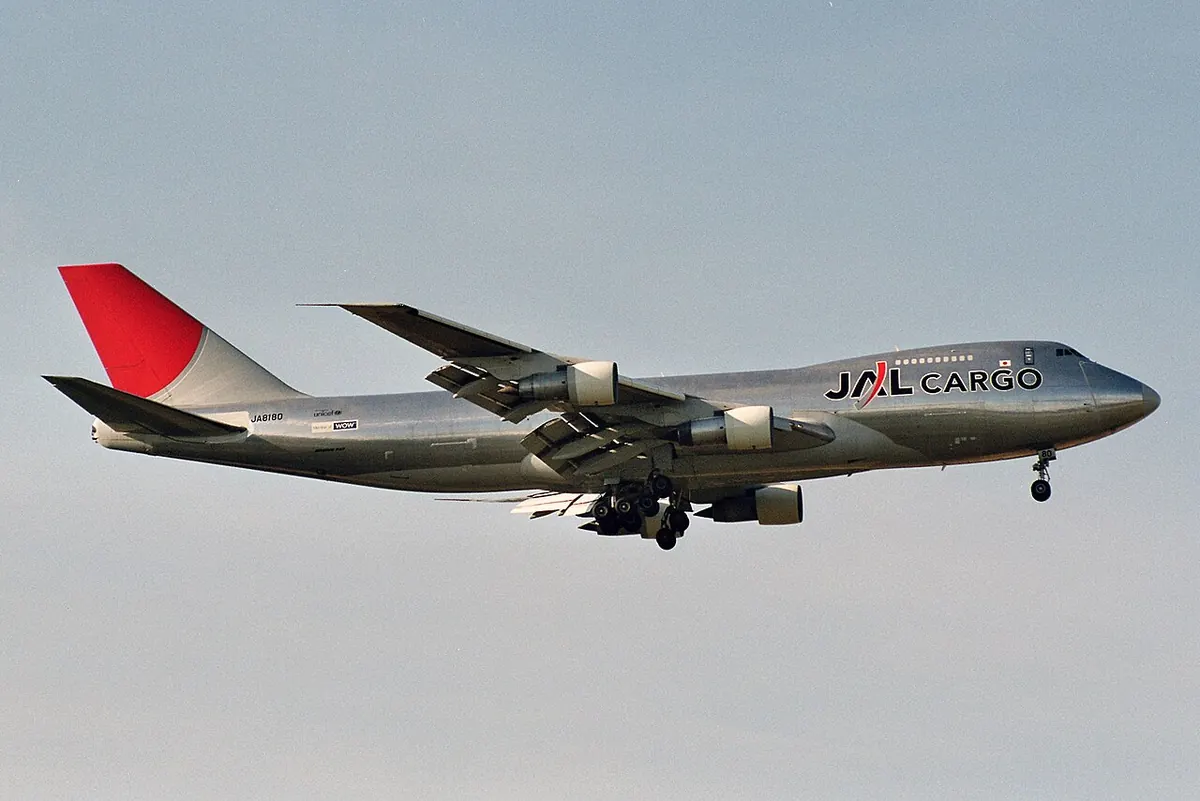
On the evening of November 17, 1986, the crew of a Japan Air Lines Boeing 747 freighter flying from Reykjavik to Anchorage reported unidentified lights keeping pace with them over Alaska. The case became famous when Captain Kenju Terauchi later described a giant “mothership.” The Federal Aviation Administration released its file in 1987, and scans are posted online by The Black Vault. With the 40th anniversary tomorrow, we read the FAA’s own documents, including the controller transcript, the radar analysis and interviews with all three crew members, to see what they say.
What the controller transcript shows
The FAA’s transcript opens at 0219 UTC on November 18, which is 5:19 p.m. Alaska time on November 17. The file’s own local-time figures differ: its transcript header says 6:18 p.m., and Klass says about 6:15. The crew asked Anchorage Center whether it had traffic at seven o’clock, then reported two aircraft ahead, about a mile away. Asked for the type, the crew said it could not identify it but could see “navigation lights and … strobe lights,” which it called white and yellow. A few minutes later a controller said he was getting a radar hit about five miles behind the jet; the crew answered that the traffic was at eleven o’clock, eight miles. The military operations center, which was also watching, said it was seeing a primary return and did not know whether it was “erroneous or whatever.” Earlier the military center had said it had nobody up there. A controller asked the crew to make a 360-degree turn and report what their traffic did, and moments later the military center confirmed it had no military aircraft in the area. A few minutes after that the military center said other equipment showed “a flight size of two” around the jet, and a controller told the crew that military radar was picking up an intermittent primary target behind them.
Later, controllers vectored United Airlines flight 69 toward the 747 to look. Its crew reported: “the Japan Airliner is silhouetted against a … light sky. I don’t see anybody around him at all. I can see his contrail but I sure don’t see any other airplanes.” Philip Klass, a skeptic of UFO claims, reported in 1987 that a USAF C-130 that offered to look spotted the 747 but reported seeing no other object near it. The transcript ends with the jet landing at Anchorage at about 0323 UTC.
What the FAA concluded, and what it didn’t
The FAA’s March 5, 1987 news release said the agency was “unable to confirm the event.” It said the FAA does not normally investigate UFO sightings and took up this one as the operator of the air-traffic system, to find out whether an unreported aircraft posed a hazard. Radar specialists at the FAA’s technical center in Atlantic City concluded that a second radar target near the jet was “not another aircraft but rather a split radar return” from the 747 itself, an “uncorrelated primary and beacon target return.”
An FAA analyst, Dennis Simantel, examined about 61 minutes of radar data. He wrote that it “did not show any abnormalities that could be associated with any type of target as indicated by the pilot,” and that about a quarter of the replies were beacon-only, nine in ten of those with a primary return within an eighth of a mile of them, which he called “not uncommon.” But the FAA explained only the radar. Its public-affairs statement said it had not tried to determine what the crew saw “based on scientific analysis of the stars, planets, magnetic fields, angle of view, etc.” and did not intend to pursue the matter further.
How the crew’s accounts compare
FAA security staff interviewed the crew on the night they landed. According to the interview notes, the crew reported yellow, amber and green lights; Special Agent James Derry’s report says they could see only the lights and “at no time” any craft, while Special Agent Ronald Mickle’s notes record the captain saying the object was as large as a 747, possibly larger, and stayed on the left side for about 35 minutes. Mickle added that a confidential source at JAL said it was not Terauchi’s first sighting of an unidentified aircraft.
In January 1987, the FAA interviewed each crew member again. Terauchi, through an interpreter, spoke of a “mothership” roughly twice the size of an aircraft carrier, and told the FAA it was his third such sighting. In a written statement, translated for the FAA, he wrote that the flight “encountered two spaceships and a Mother ship.” First Officer Takanori Tamefuji said it was his first time, that he could see the objects only for about ten minutes from his seat, and that he saw “two small aircraft.” Flight Engineer Yoshio Tsukuba said the lights ahead “were different from town lights” and that he could not describe a shape. Tsukuba also told the FAA he had been “not sure whether the object was an UFO or not” when first interviewed, and that his mind had not changed.
The skeptical reading and what the file can’t settle
Klass’s analysis, published in Skeptical Inquirer in 1987 and included in the file, argued that the bright planet Jupiter lay low in the southeast, in the direction Terauchi was looking when he placed the light “just ahead of United,” a crew that saw nothing. He also wrote that the FAA data package revealed Terauchi to be a “UFO repeater,” with two earlier sightings and two more that January, which, Klass said, Terauchi and the FAA later agreed were lights from small villages diffused by thin clouds of ice crystals. That is Klass’s reading, not an FAA finding. Those who consider the case unexplained point to a three-man professional crew and to controllers who watched a return near the jet in real time, which the FAA attributes to a radar artifact, and to military radar reports of a second target that the FAA’s release does not address.
The file does not settle what the crew saw. It documents a radar explanation, a transcript in which two other aircraft saw nothing, and three crew accounts that differ in detail. Our JAL 1628 case page has the wider story.
Sources
- FAA Alaskan Region: Selected material relative to the FAA investigation of JAL flight 1628, March 5, 1987 (news release, transcript, radar analysis; via The Black Vault) archived
- FAA: Record of interview with JAL Captain Terauchi, January 2, 1987 (via The Black Vault) archived
- FAA: Record of interview with JAL First Officer Takanori Tamefuji, January 5, 1987 (via The Black Vault) archived
- FAA: Record of interview with JAL Flight Engineer Yoshio Tsukuba, January 15, 1987 (via The Black Vault) archived
- Kenju Terauchi: “Meeting the Future,” personal statement, translated by the FAA Alaskan Region, received January 2, 1987 (via The Black Vault) archived
- FAA Air Transportation Security: investigator statements of Ronald Mickle and James Derry, November 17, 1986 (via The Black Vault) archived
- Philip J. Klass: FAA Data Sheds New Light on JAL Pilot’s UFO Report, Skeptical Inquirer, Summer 1987 (copy in the FAA file, via The Black Vault) archived
- The Black Vault: The Vault Files: 1986 Alaska JAL Flight 1628, August 25, 2025 archived