The Belgian Wave
- On the evening of November 29, 1989, police patrols near Eupen, close to the German border, report a large triangular craft with bright lights at its corners and a red-orange light in the center.
- Over about 18 months, the civilian research group SOBEPS collects roughly 2,000 reports of silent, slow, low-flying triangles. In a rare step, the Belgian Air Force cooperates openly with the civilian investigators.
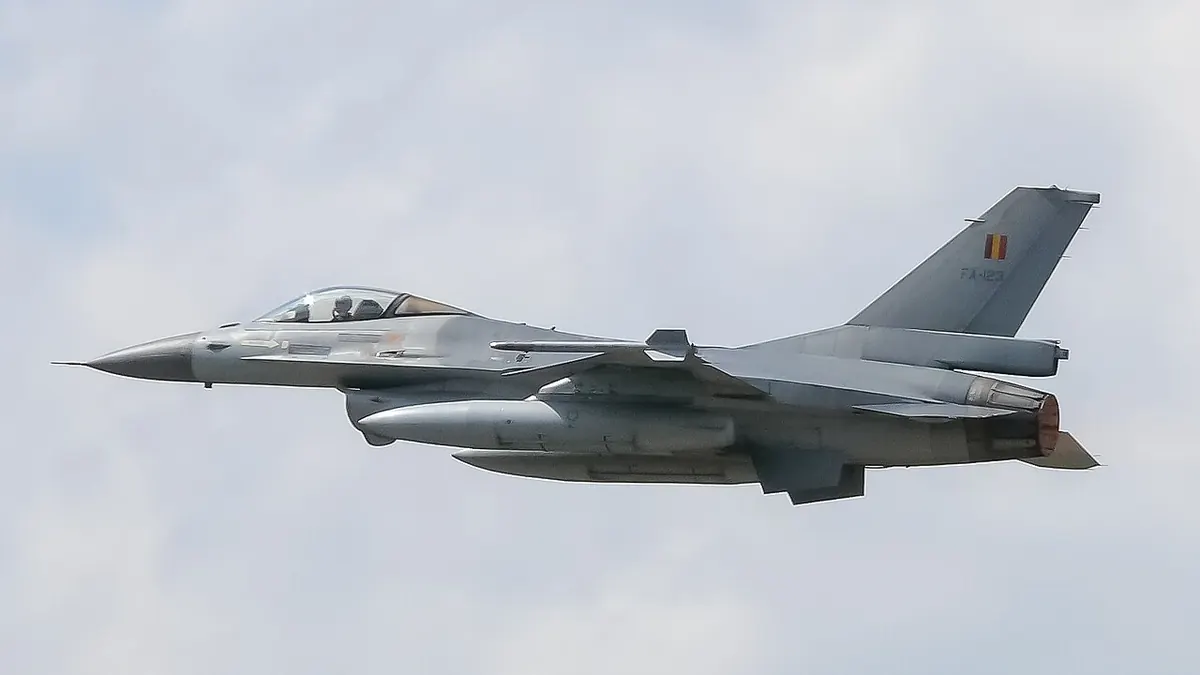
- On March 30–31, 1990, two F-16s scramble after ground radar contacts and briefly lock on to targets that seem to change speed sharply. The pilots never see anything, and skeptics blame radar interference and the jets locking on to each other.
- The wave’s most famous image, the ‘Petit-Rechain photo’ of a black triangle with glowing corners, fooled analysts for 20 years. In July 2011 the photographer admitted it was a painted foam model with flashlights.
Key witnesses: Police officers in Eupen, thousands of civilians, Belgian Air Force F-16 pilots; Col. Wilfried De Brouwer (Air Staff)
Status: PARTIALLY EXPLAINED
Background
Eupen lies in Belgium’s small German-speaking region, about seven miles from the German border. On the evening of November 29, 1989, gendarmes Heinrich Nicoll and Hubert von Montigny radioed their dispatcher, Albert Creutz, from a routine patrol to report a strange object in the sky. Creutz later recalled on Unsolved Mysteries that ‘it made no noise’ and that colleagues joked it might be Santa Claus. Skeptoid puts that night’s reports at about 30 groups of witnesses plus three police patrols.
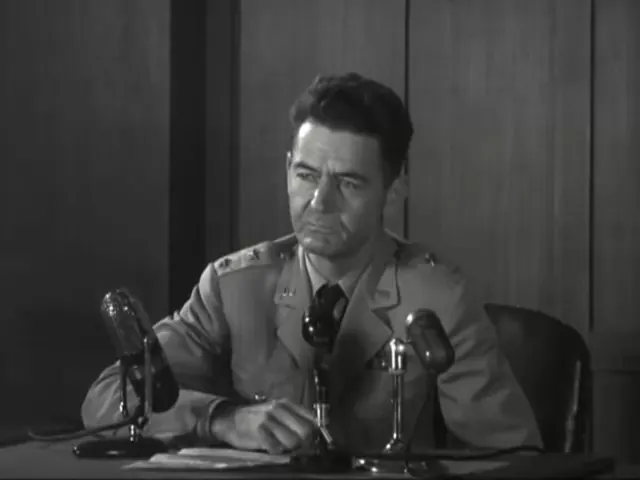
Two organizations shaped what followed. The civilian Belgian Society for the Study of Space Phenomena (SOBEPS), whose leading scientific voice was physicist Auguste Meessen of the Catholic University of Louvain, gathered witness reports. The Belgian Air Force, through Col. Wilfried De Brouwer, chief of operations of the Air Staff and later a major general, chose to work with them rather than dismiss the reports. Sightings continued through the winter, among them a December report from André Amond, an army colonel, who said he and his wife saw the lights from their car.
What was reported
De Brouwer later wrote that he first suspected secret American aircraft and asked the U.S. Embassy in Brussels; a resulting embassy memo, titled ‘Belgium and the UFO Issue,’ stated that no U.S. Air Force stealth aircraft had been operating in the area at the times in question. The Air Force, civil aviation authorities and police then agreed that F-16s would be scrambled if a sighting was confirmed by both police and radar at the same time.
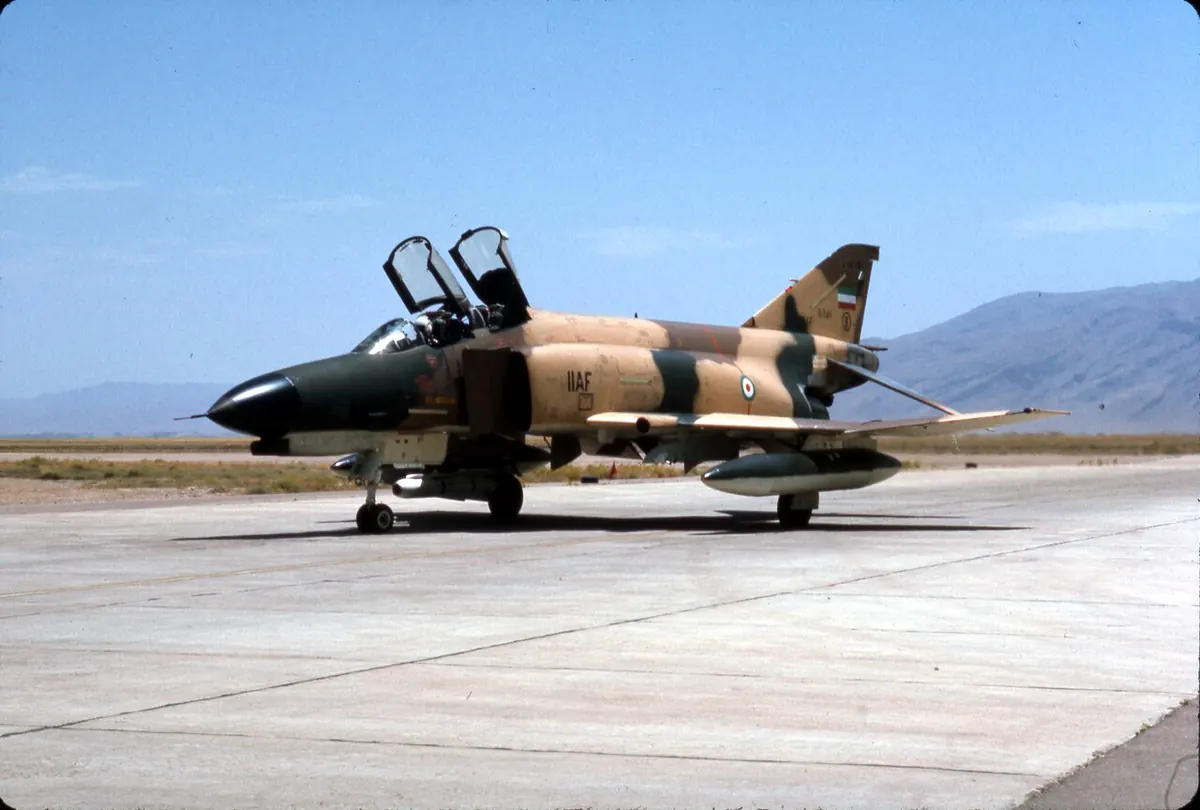
That happened on the night of March 30–31, 1990. Gendarmes reported unusual lights, and two military radar stations, at Glons and Semmerzake, recorded contacts. Two F-16s took off from Beauvechain shortly after midnight and made repeated attempts to intercept. In De Brouwer’s account, the pilots recorded radar targets that behaved strangely, at times ‘jumping huge distances in seconds.’ Neither pilot saw anything. Accounts of the lock-ons differ: SOBEPS counted nine, while the military, according to Skeptoid, reported three.
The best-known image of the wave appeared soon after. The slide was reportedly taken in early April 1990 at Petit-Rechain, near Verviers, and was first published in November 1990 by the French magazine Science et Nature. Meessen suggested that its glowing corners might be plasma jets, and former NASA scientist Richard Haines also endorsed the image. Prof. Marc Acheroy of the Royal Military Academy compared the slide with a model photo made by Van Utrecht and concluded the photographer could not have faked it that way.
Investigations and official findings
The Air Force studied the radar and cockpit data from March 30–31 in detail. De Brouwer’s summary of the outcome, in Leslie Kean’s 2010 book UFOs: Generals, Pilots, and Government Officials Go on the Record, was that the evidence was ‘insufficient to prove that there were real crafts in the air on that occasion.’ British Ministry of Defence files released by the National Archives in 2009 include his later statement to the MoD, which confirmed that the F-16 pilots had obtained radar lock-ons but could not explain what caused them. The files also show that the MoD was not told about the events at the time and concluded they posed no threat to the United Kingdom.
Explanations and debate
Skeptics see a media-driven wave. Brian Dunning of Skeptoid argues that the Eupen object was most likely a helicopter (investigator Renaud Leclet proposed a Bell UH-1 Huey) and that the stationary light the gendarmes watched matched the position of Venus. He notes that SOBEPS’s first 143 reports arrived only after a week or more of public appeals, and he attributes the F-16 contacts to atmospheric radar echoes known as ‘angels’, with the lock-ons on the jets themselves. In July 2011 the Petit-Rechain photographer, identified as Patrick M., told the broadcaster RTL that he and a work colleague had made the object from a triangle of Styrofoam about 60 to 80 centimeters across, hung from wires, with four flashlights.
Others find that account incomplete. De Brouwer has written that he can conclude ‘with confidence’ that the wave was not caused by mass hysteria, describing the witnesses as ‘sincere and honest.’ SOBEPS president Patrick Ferryn told The Telegraph that most sightings would have ordinary explanations ‘but there is a residue, which we simply can’t explain.’
Why it still matters
The Belgian wave remains one of the few cases in which a national air force openly shared radar data and cooperated with civilian investigators. It is also a cautionary tale: the photograph that defined the wave for two decades was a prank, and Belgian skeptic Wim Van Utrecht had long argued it could be reproduced with a small model. For witnesses like Amond the question is still open. ‘Today there is not yet any explanation!’ he told Kean, adding that he wanted to know before he died.
Sources
- VRT News: Belgian UFO picture was a forgery (2011) archived
- Wikipedia: Belgian UFO wave archived
- The National Archives: UFO files release, August 2009 (PDF) archived
- The National Archives: UFO files highlights guide, 2009 (PDF) archived
- Skeptoid: The Belgian UFO Wave, 2016 archived
- The Week: The Belgian UFO wave, 30 years later, 2020 archived
- Caelestia (Wim Van Utrecht): The Petit-Rechain photo confession, 2011 archived