Gimbal & GoFast
- After radar upgrades, F/A-18 pilots from the USS Theodore Roosevelt begin seeing objects nearly every day, sometimes for hours.
- Pilots describe objects that could stay airborne all day, travel at hypersonic speeds, and fly against strong winds.
- In ‘Gimbal’, a pilot can be heard saying ‘There’s a whole fleet of them’ as an object appears to rotate.
- In 2014 a pilot reports a near-miss with a ‘dark gray or black cube inside a clear sphere’.
Key witnesses: Lt. Ryan Graves, Lt. Danny Accoin, VFA-11 pilots
Status: DEBATED
Background
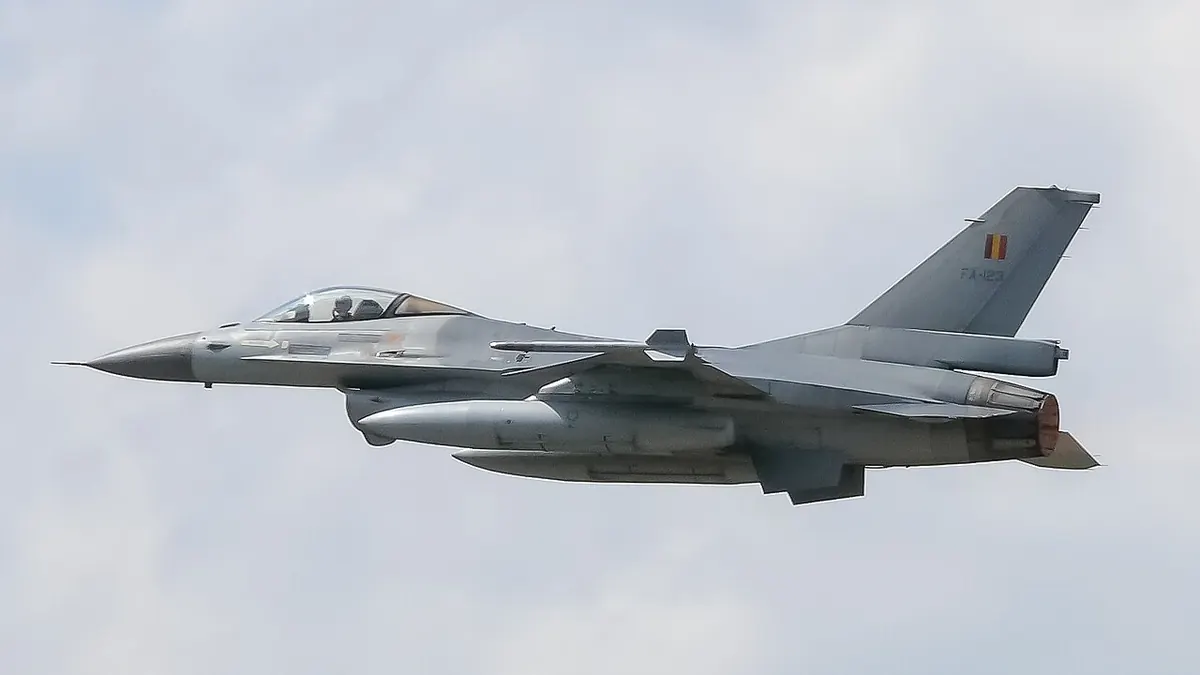
In 2014 Strike Fighter Squadron 11, the ‘Red Rippers’, was training off the U.S. East Coast with the carrier USS Theodore Roosevelt. Lt. Ryan Graves, an F/A-18F pilot in the squadron, told Congress in 2023 that the sightings began after an upgrade to the jets’ radar. At first the crews dismissed the unknown tracks as software glitches, but they later matched them with infrared sensors. He said the sightings came often enough to be covered in daily briefings.
Much of the activity was in Warning Area W-72, a block of military airspace east of Virginia Beach. Pilots who spoke to The New York Times in May 2019 described encounters from 2014 into 2015 during training off the coast from Virginia to Florida. Graves said the objects reappeared after the carrier deployed to the Persian Gulf in March 2015.
What was reported
Graves testified that in one incident, two jets flying about 100 feet apart had to take evasive action to avoid an object that one pilot described as a dark gray cube inside a clear sphere. He said it was holding still against the wind at the area’s entry point, and that the squadron filed a safety report. Lt. Danny Accoin told the Times he encountered the objects on two flights a few days apart and tracked them on radar and infrared, but could not capture them on his helmet camera. He later said the objects seemed ‘aware of our presence’.
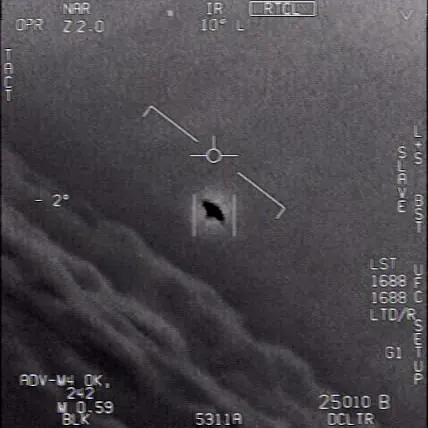
Two clips from the period became famous. In ‘Gimbal’, an infrared pod shows a dark, glowing shape that appears to rotate. The crew can be heard remarking on a fleet of objects and saying they are moving against a strong wind. In ‘GoFast’, the pod locks onto a small object that appears to skim low and fast over the ocean. Graves told Congress that Rear Adm. Tim Gallaudet recalled a 2015 classified email that attached the GoFast video and raised concerns about near mid-air collisions, and he said the email later vanished from Gallaudet’s system.
Investigations and official findings
Gimbal was published in December 2017 alongside FLIR1, and GoFast followed in March 2018, both through the Times and To The Stars Academy. In September 2019 Navy spokesman Joseph Gradisher told The Black Vault that the Navy designated the objects in the videos as ‘unidentified aerial phenomena’. He also said the videos had never been cleared for public release. The Defense Department released them formally in April 2020.
The most detailed official work concerns GoFast. NASA’s independent UAP study team, reporting in September 2023, used the numbers on the display to place the object at about 13,000 feet and estimated it was moving at about 40 mph, a typical wind speed at that height. AARO’s director, Jon Kosloski, told senators the same in November 2024, and an AARO report dated February 6, 2025 assessed ‘with high confidence’ that the object did not move at anomalous speeds. It blamed the effect on motion parallax. No comparable official resolution of Gimbal has been published.
Explanations and debate
Skeptics argue that both clips are optical illusions. Mick West says GoFast is most likely a balloon drifting with the wind, a reading later echoed by NASA and AARO. For Gimbal, he argues the shape is infrared glare from a distant jet’s engines and that the apparent rotation is an artifact of how the camera pod tracks. Kirkpatrick told The Guardian in 2024 that the source of such glare ‘could be any number of things’.
Supporters counter that the videos are only fragments of a long run of multi-sensor sightings that pilots say lasted months. Graves testified that the objects could reach about Mach 1 and hold position in hurricane-force winds, and that he had no explanation. AARO acknowledged that its GoFast analysis relied on a compressed copy of the video because the original file and metadata were lost, and some researchers say that limits its conclusions.
Why it still matters
The Roosevelt sightings changed how the military handles these reports. The Navy updated its reporting guidance in 2019, and Graves became one of the most prominent voices on aviation safety and UAP, founding Americans for Safe Aerospace. The GoFast analysis has since become a standard example of how parallax can mislead viewers, while Gimbal remains contested. Together they show both how much a few seconds of footage can reveal and how much it can leave unresolved.
Sources
- CBS 60 Minutes: UFOs in U.S. airspace (2021) archived
- Department of War: statement on the Navy videos (2020) archived
- Wikipedia: Pentagon UFO videos archived
- Congress.gov: Ryan Graves written testimony, 2023 archived
- The Black Vault: Navy confirms videos depict ‘unidentified aerial phenomena’, 2019 archived
- Space.com: ‘Fleet of UFOs’ followed US aircraft, Navy pilot says, 2019 archived
- NASA: UAP Independent Study Team final report, 2023 archived
- The Black Vault: Pentagon releases AARO report on ‘Go Fast’ video analysis, 2025 archived
- The Guardian: Sean Kirkpatrick interview, 2024 archived