Shag Harbour
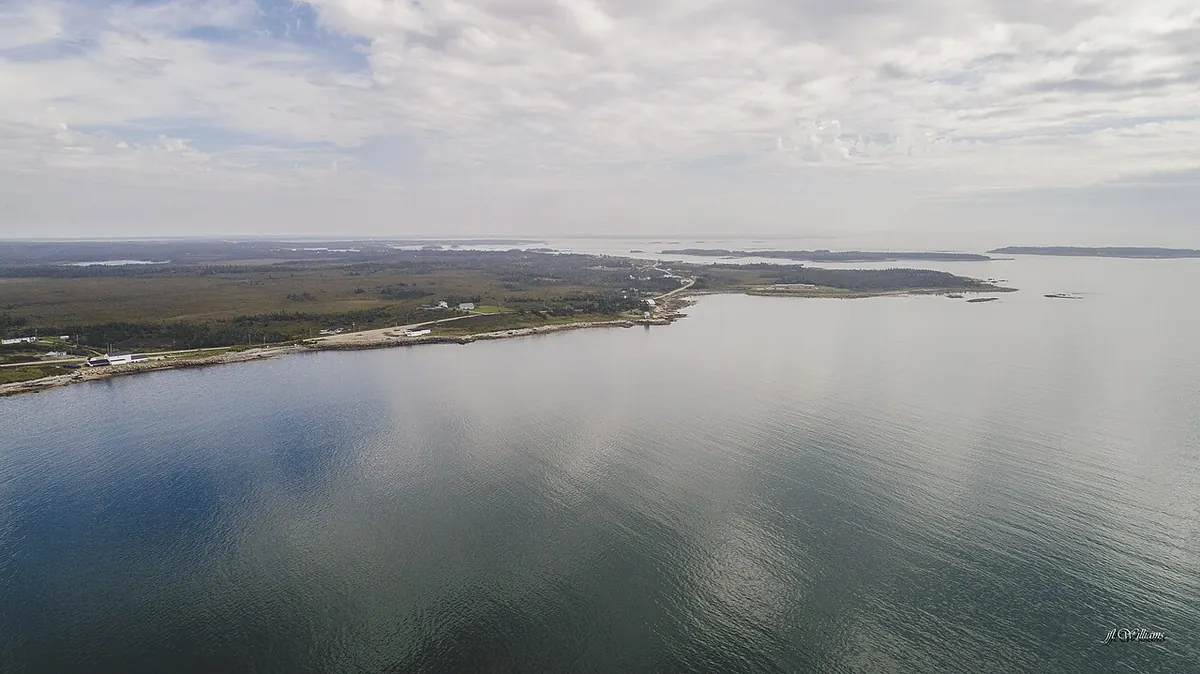
- Late on October 4, 1967, 17-year-old Laurie Wickens and his friends see four lights flashing in sequence above the coast. They then see something go down into the water off Shag Harbour.
- RCMP Const. Ron O’Brien reports a light floating about 800 meters offshore before it drifts out of sight. Police and fishermen race out in boats, expecting to find a plane crash.
- Instead, searchers report a wide trail of bubbling yellow foam that some say smelled of sulphur. No plane is missing, and Navy divers who search the seabed over the following days report finding nothing.
- A National Defence memo says rescue officials ruled out an aircraft, flares ‘or any other known objects’, and a later memo refers to the sighting as an unidentified flying object.
Key witnesses: Laurie Wickens, RCMP Const. Ron O’Brien and other officers, local fishermen
Status: UNRESOLVED
Background
Shag Harbour is a small fishing village near the southern tip of Nova Scotia, in Shelburne County. In October 1967 it was a place where most families made their living on the water, and where a light falling into the sea at night would be taken first as a plane in trouble. The local RCMP detachment was in nearby Barrington Passage.
The night of Wednesday, October 4 was clear and, according to the case file later compiled for the University of Colorado’s Condon Committee, moonless. Lights had been reported elsewhere in the region that evening. Researcher Chris Styles later traced a Pan Am cargo crew flying over the Gulf of Maine who, according to The Canadian Press, saw similar lights but never filed a report.
What was reported
At around 11:20 p.m., Laurie Wickens and friends driving near the shore saw a row of lights descend toward the water at a shallow angle. Witness accounts gathered at the time differ on the details: some counted three lights and others four, and their colors were described variously as reddish-orange, yellow or white. Wickens has said he watched an orange glow settle on the water a few hundred meters offshore, and he phoned the RCMP from a nearby phone booth.
Constable Ron Pound, who said he had seen the lights himself from the highway, estimated the object at about 60 feet long, according to a municipal summary of the case. He reached the shore with Corporal Victor Werbicki (spelled Werbieki in some records) and Constable Ron O’Brien, and they watched a single light on the water for several minutes before it disappeared. Fishing boats and Coast Guard Cutter 101 searched until about 3 a.m. The crew of one boat described a patch of yellowish foam, which a fishing captain said was at least 80 feet wide.
Investigations and official findings
The Rescue Coordination Centre in Halifax confirmed that no civil or military aircraft were missing and passed the case to Ottawa. A memo signed on October 6 by Col. W. W. Turner said the center had discounted an aircraft, flares or floats. Navy divers then spent about three days searching the seabed and, according to military records, found nothing. On October 7 the Halifax Chronicle-Herald quoted the air force as saying there could be ‘something concrete’ at Shag Harbour, and by October 9 newspapers were reporting that the search had been called off.
The Condon Committee logged the event as Case 34, ‘North Atlantic, Fall 1967’, based on a report passed on by James Lorenzen of the Aerial Phenomena Research Organization. Its 1969 report noted that boats and divers had found ‘no debris or wreckage’ and concluded that, given the thoroughness of the Canadian search, ‘no further investigation by the project was considered justifiable.’ It offered no explanation.
Explanations and debate
In the 1990s Styles and fellow researcher Don Ledger reopened the case, interviewing witnesses and former military personnel, and in 2001 they published Dark Object. Drawing on sources who spoke off the record, they argued that the object moved underwater toward a naval facility near Shelburne, where a second craft joined it before both left. No documents supporting that account have been made public, and Wickens has said he believes divers found something but cannot prove it.
Skeptic Brian Dunning of Skeptoid argues that the contemporary accounts agree only that a few lights fell toward the bay, and that a meteor breaking up or marine distress flares could fit. He contends that the official line about flares being ruled out loosely paraphrases a Coast Guard telex that simply reported ‘nil results’ from checks. Proponents counter that three police officers saw the light on the water for several minutes, that the witnesses described a large object rather than scattered flares, and that officials of the time were willing to put the words ‘unidentified flying object’ in writing.
Why it still matters
Because RCMP reports, telexes and defense memos survive and refer to an unidentified flying object without attempting to explain it away, Shag Harbour is often described as Canada’s best-documented UFO case. The village now has a small museum run by the Shag Harbour Incident Society, and in 2019 the Royal Canadian Mint issued a glow-in-the-dark $20 silver coin showing fishermen watching the lights descend. According to The Canadian Press, most of its 4,000 coins sold on the first day.
Sources
- CBC News: The Shag Harbour incident archived
- Wikipedia: Shag Harbour UFO incident archived
- The Canadian Press (via CFJC Today): Canada’s best-documented UFO sighting still intrigues, 2017 archived
- Condon Committee report: Case 34, North Atlantic, Fall 1967, 1969 (NCAS archive) archived
- Skeptoid: The Shag Harbour UFO, 2017 archived
- Municipality of the District of Barrington: Shag Harbour UFO incident archived
- The Canadian Press (via CFJC Today): Mint’s glow-in-the-dark coin features Shag Harbour, 2019 archived