Saucers Over Washington
- Just before midnight on July 19, 1952, controller Edward Nugent at Washington National Airport spots seven unknown targets on radar. Radar at nearby Andrews Air Force Base also picks up targets.
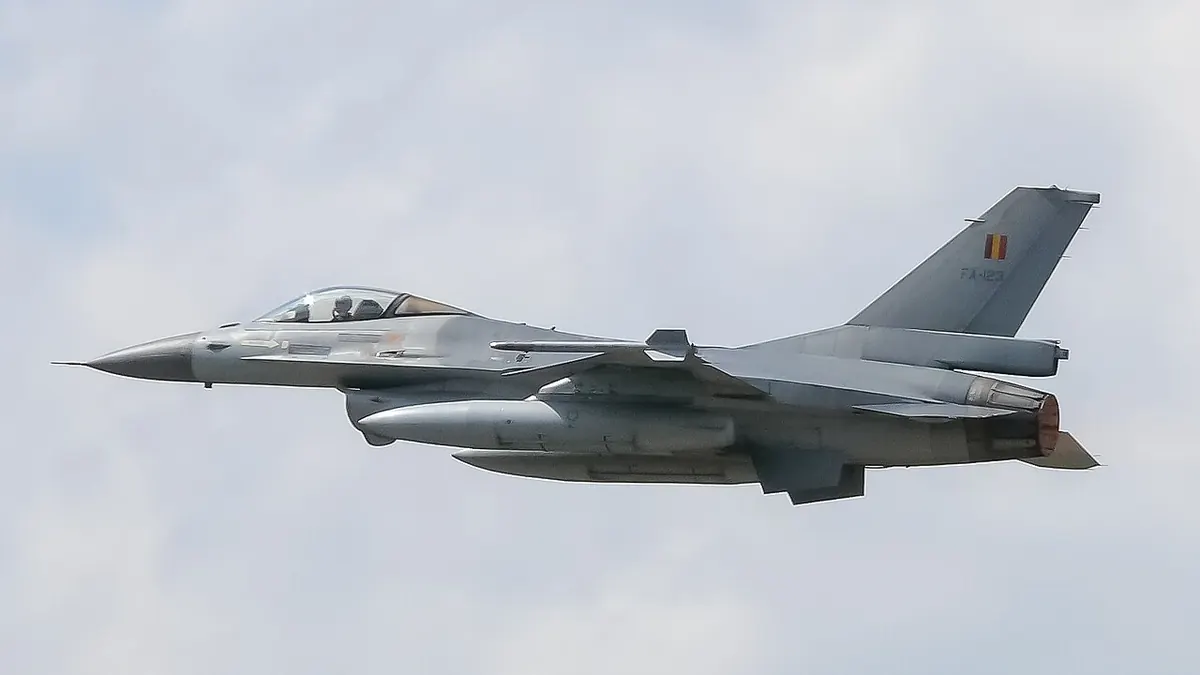
- Capital Airlines pilot S.C. Pierman reports fast, white, tailless lights. When F-94 interceptor jets finally arrive, the blips disappear from the screens.
- A week later, on July 26–27, the targets return. Jet pilot Lt. William Patterson says he chased glowing lights at full speed but could not close on them. Headlines declare ‘Saucers Swarm Over Capital,’ and President Truman asks for answers.
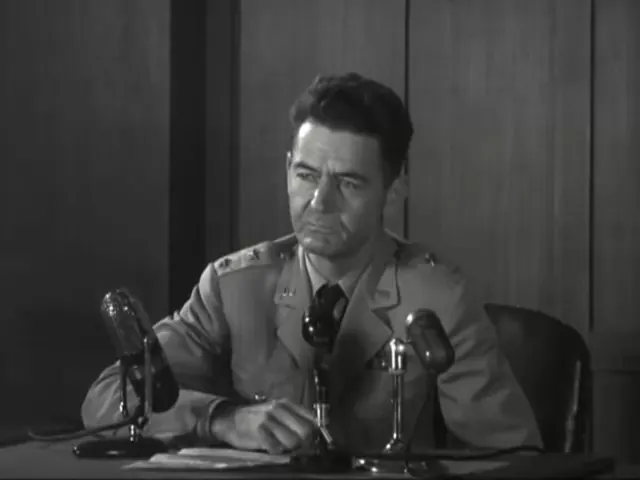
- At the Pentagon’s largest press conference since World War II, Maj. Gen. John Samford blames temperature inversions, layers of warm air that can create false radar echoes. Several of the radar operators involved never accepted that explanation.
Key witnesses: Edward Nugent and Harry Barnes (air traffic control), Capt. S.C. Pierman (Capital Airlines), Lt. William Patterson (USAF)
Status: EXPLAINED / DISPUTED
Background
By the summer of 1952 the United States was in the middle of its biggest wave of UFO reports to date. According to figures later reported by The Washington Post, sightings logged by the Air Force rose from 23 in March to 148 in June, and in April Life magazine had run a widely read article arguing that there was a case for interplanetary saucers. The Air Force’s small investigative office, recently reorganized as Project Blue Book under Capt. Edward Ruppelt at Wright-Patterson Air Force Base in Ohio, was by mid-July receiving about twenty reports a day.
Washington National Airport had a long-range radar in its Air Route Traffic Control (ARTC) center, run by the Civil Aeronautics Administration, and a shorter-range set in its control tower. Andrews Air Force Base, a little over ten miles to the east, had its own radar, and the stations were linked by intercom.
What was reported
The first episode began at 11:40 p.m. on Saturday, July 19, when the ARTC radar showed a group of slow targets southeast of the city. Senior controller Harry Barnes called in colleagues, had the set checked by a technician, and alerted Andrews and Bolling Air Force Base. Over the night the targets loitered at 100 to 130 miles an hour, then darted off, and some crossed the restricted airspace over the White House and the Capitol. Capital Airlines Capt. S.C. ‘Casey’ Pierman reported six lights over about fourteen minutes. Tower staff at Andrews described a ‘huge fiery-orange sphere’, and an F-94 arrived only around daybreak, by which time nothing was found.
On the night of July 26 the targets returned in an arc from Herndon, Virginia, to Andrews. This time Air Force intelligence officer Maj. Dewey Fournet, Navy radar specialist Lt. John Holcomb and Pentagon press officer Al Chop were in the radar room. Reporters were asked to leave as two F-94s from New Castle County Air Force Base in Delaware arrived around midnight, and the blips vanished, only to return after the jets left. On a second sortie, Lt. William Patterson said he chased several lights, reporting afterward, ‘I was at my maximum speed, but even then I had no closing speed.’
Investigations and official findings
President Truman’s air aide, Brig. Gen. Robert Landry, phoned Air Force intelligence to ask what was going on; Ruppelt says he told Landry the targets could have been caused by weather but there was no proof. On July 29 Maj. Gen. John Samford, the Air Force’s director of intelligence, held what Ruppelt called the largest and longest Air Force press conference since World War II. Samford and radar officer Capt. Roy James raised temperature inversions as a likely cause, and the next day’s headlines reported that the Air Force had debunked the saucers.
The episode also stirred the CIA. A 1997 history by CIA historian Gerald Haines says the July sightings alarmed the Truman administration and led the agency to form a study group, which in turn led to the Robertson Panel of scientists that met from January 14 to 17, 1953 and found no evidence of a direct threat to national security. In May 1953 the CAA’s Technical Development Report No. 180, based on further radar observations in Washington that August and in Indianapolis, concluded that such targets were most likely caused by temperature inversions and noted that the weather around Washington that summer had been unusually favorable for them.
Explanations and debate
Skeptics, including the aviation journalist Philip Klass, have long cited the CAA study as the answer. Ruppelt himself recorded several points on that side: the Andrews tower operators later said they had probably seen a star; one airline pilot recalled being vectored onto a ‘target’ that turned out to be a steamboat on the Potomac; and in all the overlapping coverage, the three radars only once tracked the same target at the same moment.
On the other side, Ruppelt noted that the Washington controllers were highly experienced, that pilots several times saw lights where the radar showed targets, and that while mild inversions were present on the nights in question, they were present on almost every summer night, yet the strange targets appeared only on a few. Physicist Bruce Maccabee has argued that the inversions were too weak to explain the returns. In his 1956 book Ruppelt wrote that the sightings were still carried as unknowns.
Why it still matters
The press conference is often cited, including by former British Ministry of Defence official Nick Pope, as an example of officials projecting certainty they did not have. According to Ruppelt, reports fell from about 50 a day to 10 within a week once the headlines faded. The episode helped set the course of U.S. policy for decades, leading through the Robertson Panel to an emphasis on reducing public interest rather than investigating. It remains one of the best-documented radar-visual cases and a staple of later debates over how the government handles sightings over sensitive airspace.
Sources
- Wikipedia: 1952 Washington, D.C. UFO incident archived
- CIA, Studies in Intelligence: CIA’s Role in the Study of UFOs, 1947–90 (Gerald K. Haines), 1997 archived
- Civil Aeronautics Administration: A Preliminary Study of Unidentified Targets Observed on Air Traffic Control Radars (Technical Development Report No. 180), 1953 archived
- Project Gutenberg: Edward J. Ruppelt, The Report on Unidentified Flying Objects, 1956 archived
- The Washington Post (via The Seattle Times): Something in the air – 50 years ago, UFOs streaked over D.C., 2002 archived
- History.com: When UFOs Buzzed the White House and the Air Force Blamed the Weather, 2018 archived