Roswell
- Rancher Mac Brazel finds a field of strange debris: foil-like material, rubber strips, tough paper and balsa-like sticks.
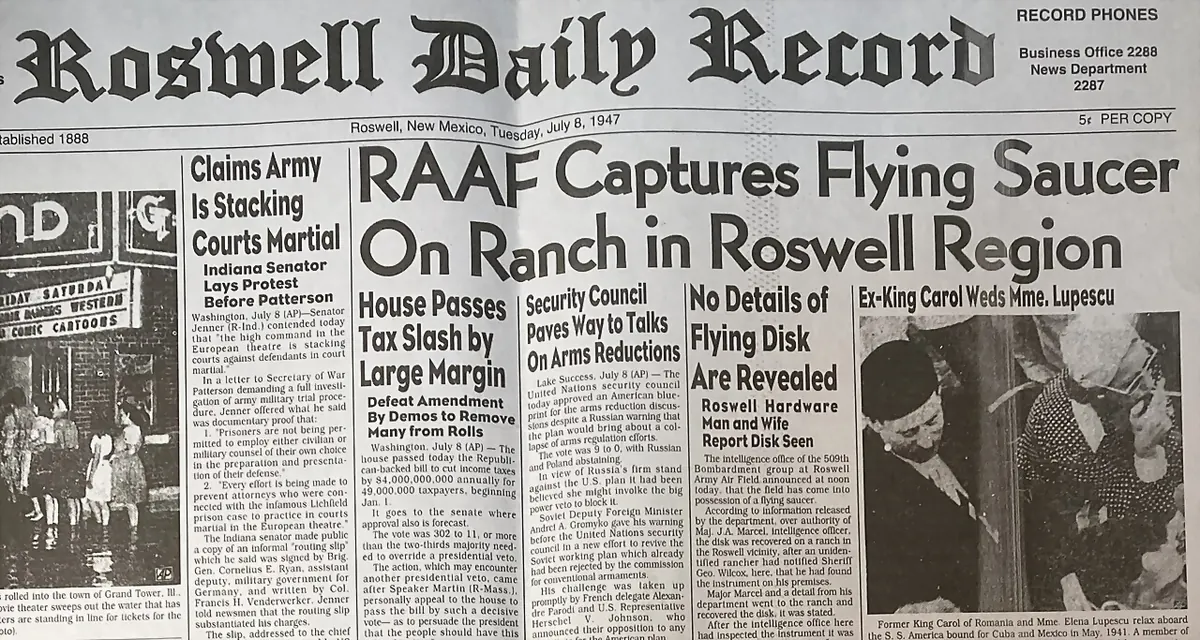
- On July 8, the 509th Bomb Group issues a press release announcing the capture of a ‘flying disc’. Within 24 hours, the Army says it was a weather balloon.
- In the 1970s, intelligence officer Maj. Jesse Marcel says the debris was ‘not of this earth’. Dozens of other witnesses come forward with stories of bodies and cover-ups.
- In 1994 and 1997 the Air Force releases reports identifying the debris as Project Mogul and explaining ‘body’ stories as crash-test dummies from later decades.
Key witnesses: Maj. Jesse Marcel, Mac Brazel, Walter Haut (press officer)
Status: EXPLAINED / DISPUTED
Background
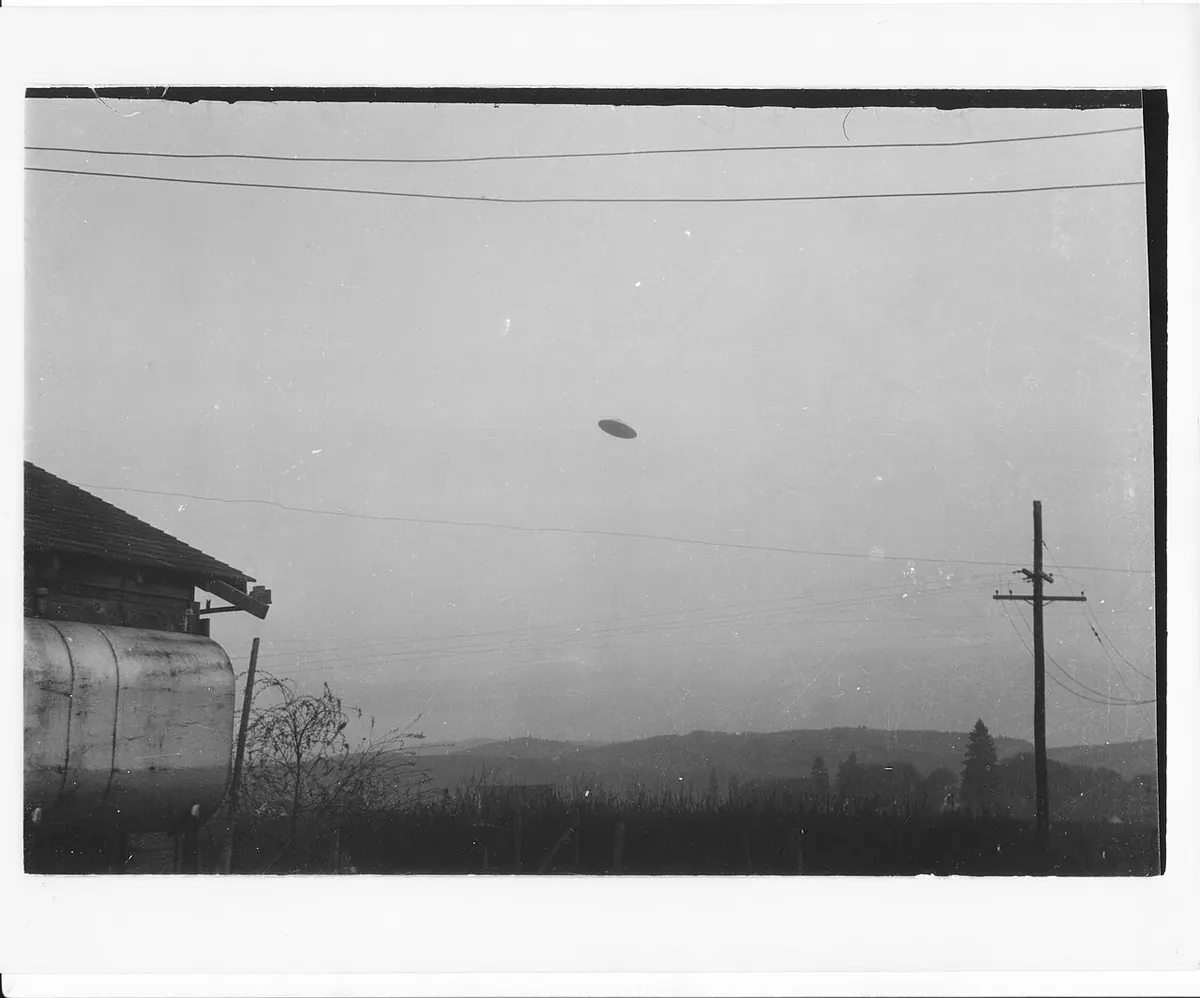
The summer of 1947 was the first great American ‘flying saucer’ season. After pilot Kenneth Arnold reported nine fast objects near Mount Rainier on June 24, newspapers filled with fresh sightings and talk of rewards for anyone who could produce a disc.
Roswell Army Air Field in southeastern New Mexico was home to the 509th Bomb Group, the unit that had flown the atomic missions against Japan in 1945. Its commander, Col. William Blanchard, reported to Brig. Gen. Roger Ramey of the Eighth Air Force in Fort Worth. Some 75 miles from town, on the J.B. Foster ranch in Lincoln County, foreman William ‘Mac’ Brazel came across a scatter of debris. In a newspaper interview on July 8 he said he had first found it on June 14, weeks before he took any of it to the authorities.
What was reported
On July 7 Brazel brought some of the material to Chaves County Sheriff George Wilcox, who called the air field. Blanchard sent the base intelligence officer, Maj. Jesse Marcel, and counterintelligence officer Capt. Sheridan Cavitt to the ranch, and they gathered what they could. The next day the base public information officer, Lt. Walter Haut, issued the now-famous release saying the 509th had come into ‘possession of a disk’ with the help of a local rancher and the sheriff’s office. The Roswell Daily Record put the story on its front page that afternoon.
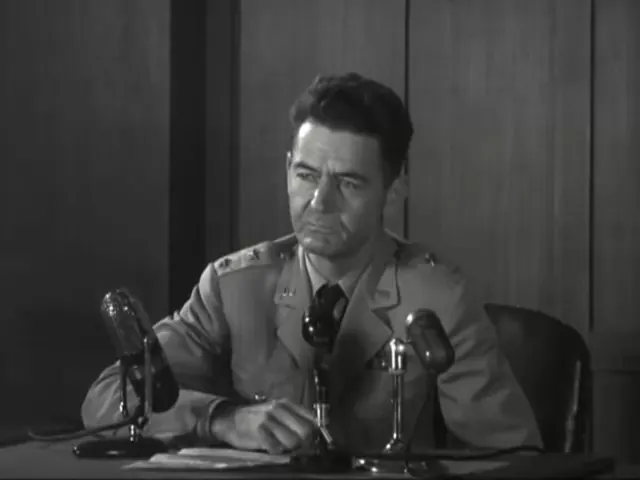
The material was flown to Fort Worth, where it was photographed with Marcel and identified by weather officer Irving Newton as the remains of a balloon and a radar target. An FBI teletype sent from Dallas on July 8 records that an Eighth Air Force official had described a hexagonal disc hanging from a large balloon by cable, and that the object resembled a high-altitude weather balloon with a radar reflector. Within a day the story had collapsed.
Investigations and official findings
At the request of New Mexico congressman Steven Schiff, the General Accounting Office searched military, FBI, CIA and other files. Its report of July 28, 1995 found only two contemporary records: the 509th’s July 1947 unit history, which said the ‘flying disc’ had ‘turned out to be a radar tracking balloon’, and the FBI teletype. It also found that the base’s outgoing messages from October 1946 to December 1949 had been destroyed, with no record of who destroyed them or on what authority.
The Air Force’s own July 1994 report, by Col. Richard Weaver and 1st Lt. James McAndrew, concluded that the debris most likely came from Project Mogul, a Top Secret program flying long trains of balloons and corner reflectors to listen for Soviet nuclear tests. McAndrew identified the probable culprit as New York University flight No. 4, launched from Alamogordo on June 4, 1947, and suggested that the strange markings some witnesses recalled were figures printed on tape used to build the radar targets. A second report, The Roswell Report: Case Closed, released June 24, 1997, argued that stories of alien bodies blended memories of later events, including test dummies dropped from balloons, a 1956 KC-97 crash that killed 11 airmen and a 1959 balloon accident. In March 2024 the Pentagon’s All-domain Anomaly Resolution Office (AARO) released the first volume of its historical review, which repeated the Air Force finding that the debris was consistent with a Mogul balloon and assessed a crashed Mogul balloon to be ‘the source of early UFO claims’.
Explanations and debate
Skeptics argue that the core of the case was settled in 1947 and that the later story was built from memories gathered 30 or more years after the fact. Brian Dunning of Skeptoid notes that mortician Glenn Dennis’s widely repeated account of a nurse and small bodies only surfaced in 1989, and that the Air Force traced several of its details to people and events at the base in the mid-1950s. He adds that Haut’s stories grew over time and that Haut, as president of the town’s UFO museum, had a stake in them.
Proponents answer that Mogul surfaced only after decades of a weather-balloon story the Air Force itself later abandoned. Researcher Kevin Randle has argued that Mogul records show flight No. 4 was canceled, and that several senior officers at the base later said they believed the object was not of earthly origin. Marcel, who died in 1986, told researcher Stanton Friedman in 1978 that the material was not from this world and that he had been ordered to keep quiet. In a statement signed in 2002 and published in 2007, after his death in December 2005, Haut said he had seen an egg-shaped craft and two small bodies; doubters point out that this account appeared decades after his earlier, much more limited ones.
Why it still matters
Roswell’s revival began with Friedman’s interviews, Charles Berlitz and William Moore’s 1980 book The Roswell Incident, a 1989 episode of Unsolved Mysteries and Kevin Randle and Donald Schmitt’s 1991 UFO Crash at Roswell. Haut, Dennis and others founded the International UFO Museum and Research Center in Roswell in 1991, and the city has built a tourist economy on the name. The case remains the template for later claims of crash retrievals, including those aired before Congress in 2023, and a lasting example of how official secrecy, even about a mundane project, can feed suspicion.
Sources
- Wikipedia: Roswell incident archived
- History.com: Air Force reports on Roswell (1997) archived
- U.S. General Accounting Office: Results of a Search for Records Concerning the 1947 Crash Near Roswell (GAO/NSIAD-95-187), 1995 archived
- U.S. Air Force (archived by the National Archives): Roswell Report: Case Closed, 1997
- U.S. Air Force: McAndrew synopsis, Report on Project Mogul, 1994 (copy hosted at Lawrence Berkeley Lab) archived
- Skeptoid: Aliens in Roswell, 2007 archived
- Space.com: Roswell Incident – the truth behind the ‘flying saucer’ crash archived
- AVweb: 60 Years Later, A Twist In Roswell Story, 2007 archived
- AARO: Report on the Historical Record of U.S. Government Involvement with UAP, Volume I, 2024 archived