The Westall Sighting
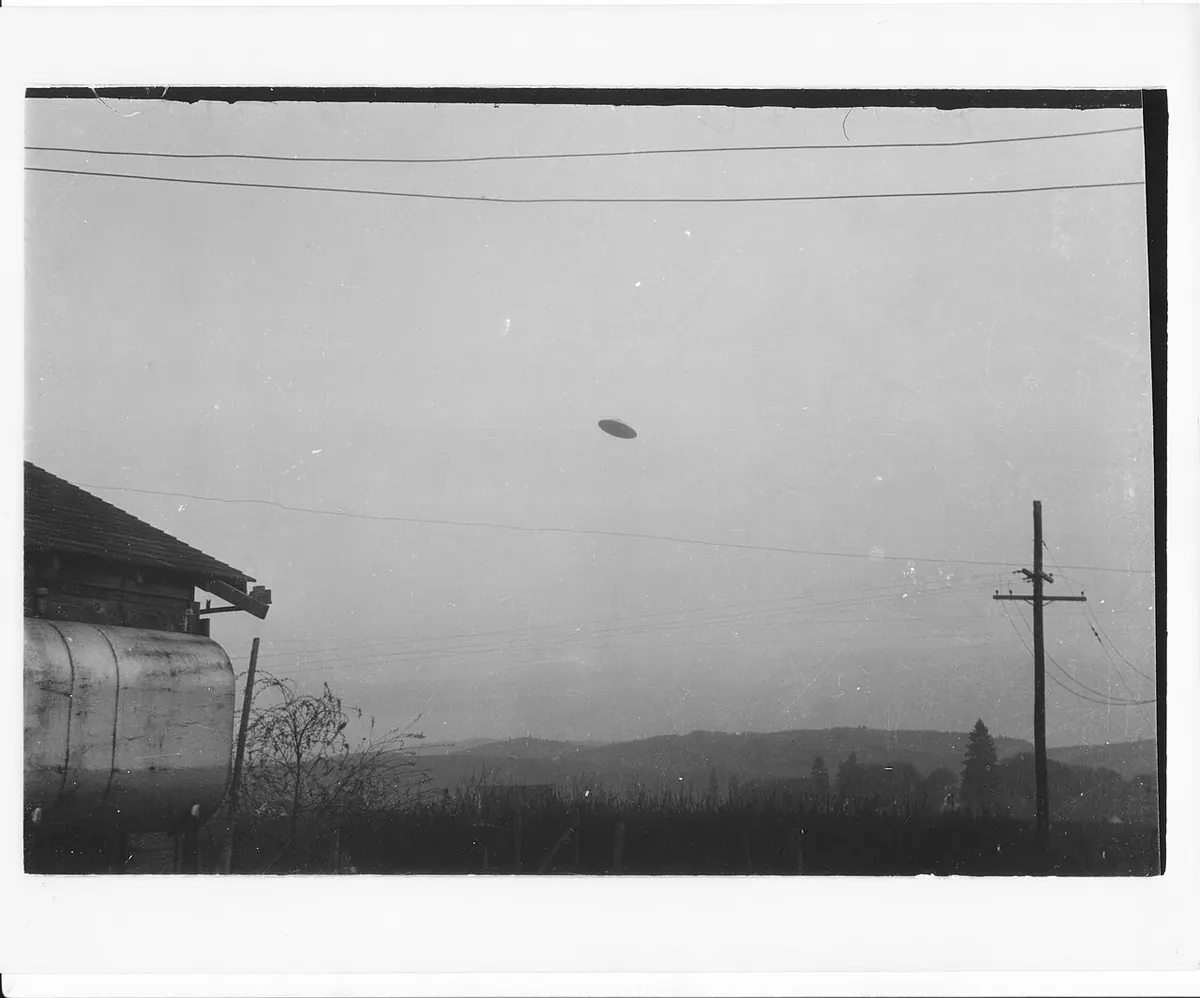
- During morning break on April 6, 1966, students and teachers at Westall High School say they watch a silver, saucer-shaped object, about the size of two or three cars, move erratically across the sky.
- Witnesses say it dropped toward a nearby patch of bush called the Grange. Students who ran after it describe a swirled circle of flattened, yellowed grass, and several recall light planes circling the object.
- Later that day the principal tells students there is no such thing as flying saucers and orders them not to talk about it. Some say unidentified men later urged them to stay quiet.
- Theories include a stray balloon from the secret HIBAL radiation-monitoring program or a weather balloon. A surviving HIBAL team member says no balloon came down there, and no official records have surfaced.
Key witnesses: Students and staff of Westall High and Primary schools, including science teacher Andrew Greenwood; researcher Shane Ryan has interviewed 142 sky witnesses
Status: UNRESOLVED
Background
In 1966 Westall High School was a state school in Clayton South, in Melbourne’s fast-growing southeastern suburbs, next to Westall Primary School and a few miles from Moorabbin Airport, a busy base for light aircraft. Across the road lay the Grange, a paddock with a stand of pine trees. April 6 was the Wednesday before Easter. That morning’s forecast in The Age called for fresh to strong, gusty westerly to southwesterly winds.
What was reported
Accounts compiled by the researchers Keith Basterfield and Shane Ryan put the sighting at mid-morning, around 10:15 to 10:20 a.m., although some later sources say about 11. A physical education teacher, Jeanette Muir, is often named as the first adult to notice the object. Science teacher Andrew Greenwood took his class outside. Estimates of how long it lasted range from about 15 to at least 25 minutes.
Descriptions varied from the start. In a June 1967 interview with the American atmospheric physicist James E. McDonald, Greenwood described a silent, gray, cigar- or finger-shaped object about two-thirds the size of a Cessna. A 12-year-old student who filled in a report form for the Victorian Flying Saucer Research Society described two round, silver objects, rounded on top and flat underneath, with a whirring noise. Researchers from the society visited the Grange on Good Friday, April 8, and recorded circular patches in the grass.
Investigations and official findings
No official investigation report has ever been released. The Age ran a short item on April 7 under the headline ‘Object perhaps balloon’, pointing to a Weather Bureau balloon released at Laverton at 8:30 that morning. The local Dandenong Journal carried the story on its front page for two weeks. According to the paper, the Army denied having had personnel in the area, the RAAF said it had no aircraft there, and Moorabbin reported about a dozen take-offs that morning. On April 21 it asked, ‘Who were 5 pilots?’ None of the light-aircraft pilots witnesses described has ever been identified. Witnesses have also described visits by uniformed or suited men, but no document confirming them has surfaced.
Explanations and debate
Two balloon explanations dominate. Richard Saunders of Australian Skeptics has called the Laverton weather balloon ‘a very likely candidate’, though not proven, citing the westerly winds. Shane Ryan says the wind data rule it out, and in May 2026 Saunders said new information might eliminate it. Basterfield has argued that a stray balloon from HIBAL, a secret joint U.S.–Australian program flown from Mildura to sample the upper atmosphere for fallout, is a plausible match, while acknowledging gaps in the launch records. John Sutcliffe, a former HIBAL team member who has written about the project, has said there was no HIBAL balloon involved at Westall and that he recalls none coming down in Melbourne that day. In April 1966 a former RAAF navigator suggested in a letter to the Journal that the object was a towed target used for air-to-air firing practice.
Skeptics also stress how far memories have shifted over six decades. Some accounts that circulated in later decades added a landing, occupants and soldiers in white overalls, details absent from 1966 reporting and disputed by other researchers. Supporters answer that dozens of witnesses, including teachers, independently describe the same object, the flattened grass and the aircraft, and that a balloon does not easily explain the erratic movement they recall.
Why it still matters
Westall is often called Australia’s largest mass sighting, and the silence that witnesses say was imposed at the school became part of the story. The 2010 documentary Westall ’66: A Suburban UFO Mystery, directed by Rosie Jones and narrated by Ryan, brought it to a national audience on Foxtel. Witnesses held a reunion for the 40th anniversary in 2006 and gathered again at the Grange for the 60th in 2026. The City of Kingston’s playground at the Grange Reserve, built around a climbable flying saucer with information panels, now marks the spot where many say the object came down.
Sources
- ABC News (Australia): Westall witnesses want answers (2026) archived
- City of Kingston local history: Westall archived
- Project 1947: Basterfield, Westall source material, 2012 archived
- Australian Skeptics: Saunders, The Westall UFO of 1966, 2026 archived
- Mildura Rural City Council: Project HIBAL – John Sutcliffe Collection archived
- City of Kingston: The Grange Reserve archived
- Region Canberra: Westall ’66: A Suburban UFO Mystery, 2010 archived