The Aguadilla Infrared Video
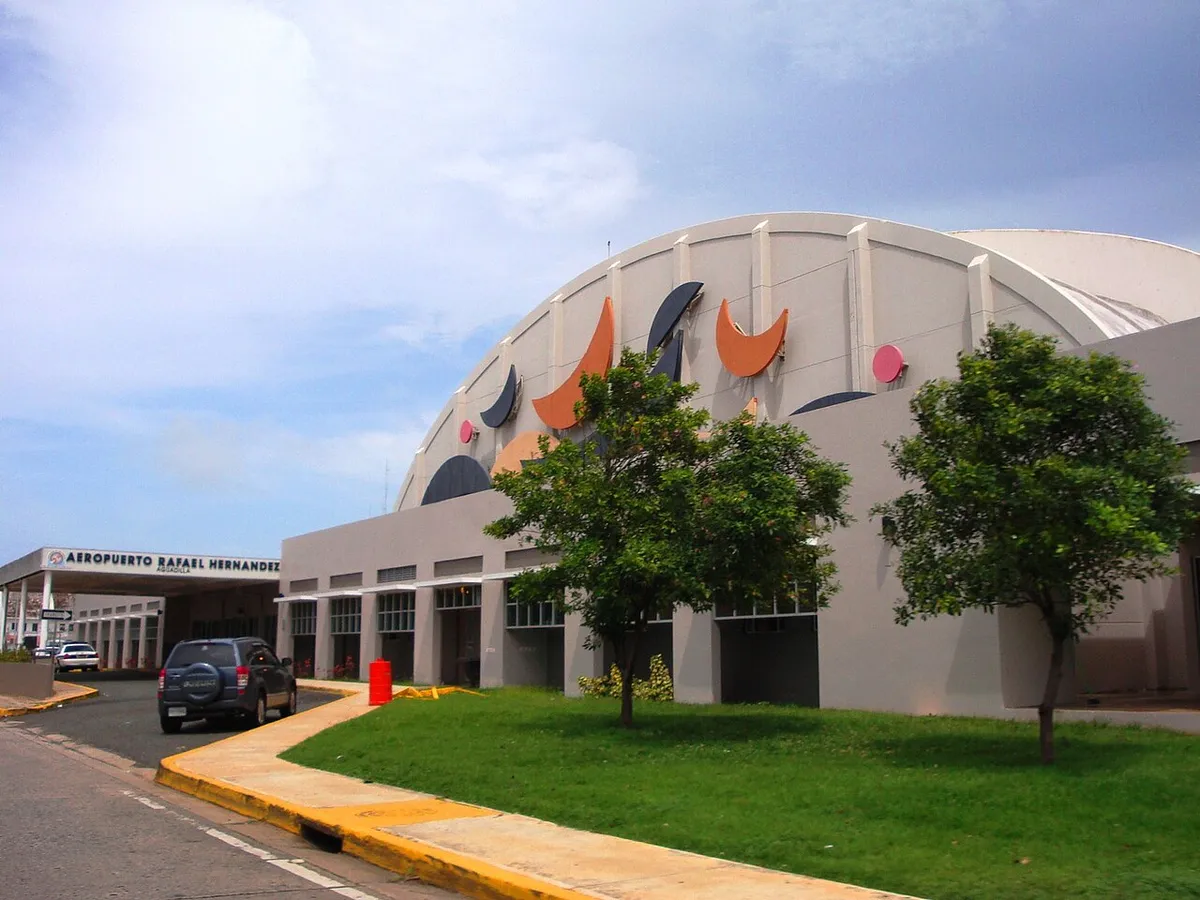
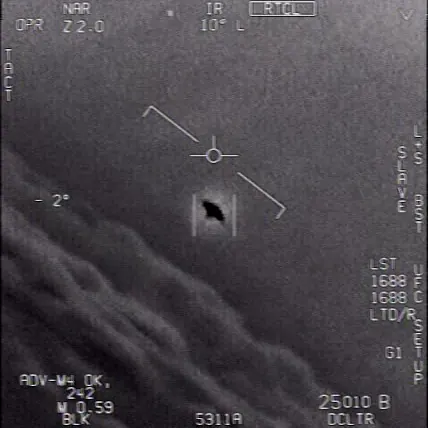
- At about 9:22 p.m. local time on April 25, 2013 (April 26 in UTC), a U.S. Customs and Border Protection DHC-8 patrol plane records infrared video of what appears to be a small hot object over Rafael Hernández Airport in Aguadilla.
- The clip reaches the public without an official release. An anonymous sender gives a copy to The Black Vault in 2014, claiming the object circled the airport, was joined by a second object that rose from the sea, and that both went into the Atlantic.
- The Scientific Coalition for UAP Studies argues that wind alone cannot explain the motion. Skeptics, including retired Argentine Air Force officer Rubén Lianza in 2017, propose two hot-air wedding lanterns drifting downwind.
- In 2025 the Pentagon’s AARO says it has high confidence the objects were not anomalous and moderate confidence they were sky lanterns drifting at about 8 mph over land. It blames the apparent speed on parallax and the vanishing on thermal crossover.
Key witnesses: CBP aircrew and an airport tower operator, per an anonymous letter; none publicly named
Status: EXPLAINED / DISPUTED
Background
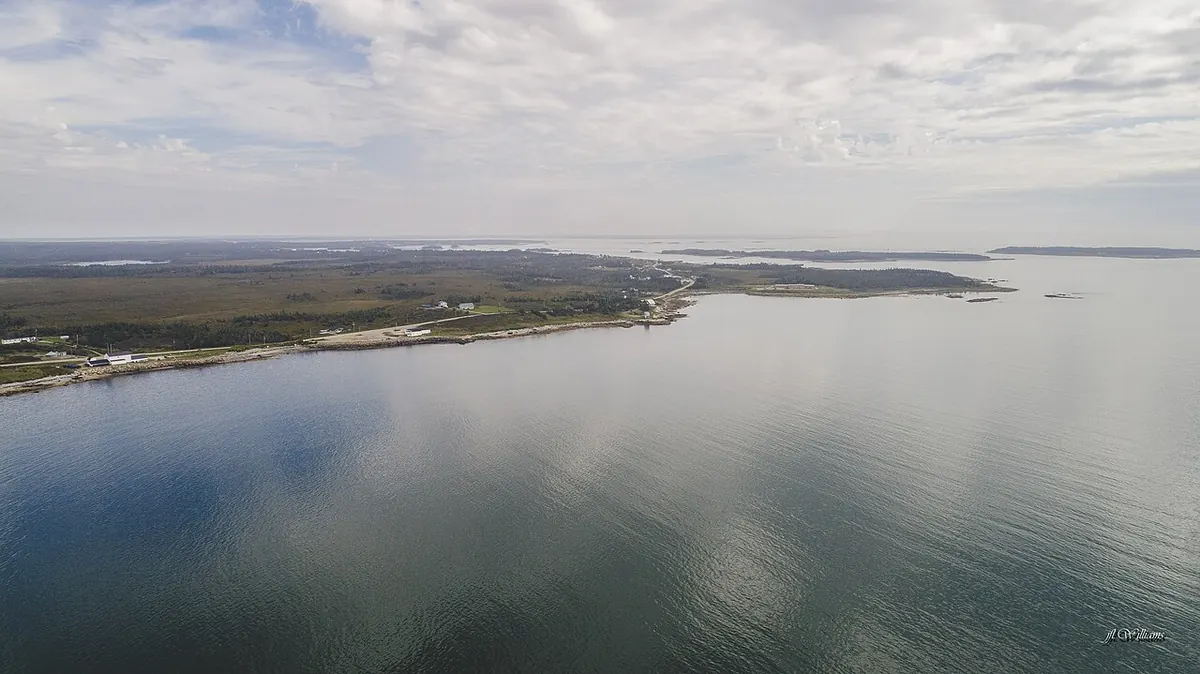
Rafael Hernández Airport sits on the northwestern tip of Puerto Rico, near the town of Aguadilla, with the Atlantic Ocean just beyond its runway. On the evening of April 25, 2013, local time (April 26 in UTC), a De Havilland Canada DHC-8 patrol aircraft operated by U.S. Customs and Border Protection (CBP) was flying around the field. It carried an infrared camera turret that the anonymous letter and SCU’s report identify as an L-3 Wescam MX-15 (SCU: model MX-15D).
The recording did not come from an official release; SCU says it obtained an original copy from an anonymous official source in October 2013. A letter from an anonymous sender reached the website The Black Vault in September 2014, along with a high-definition copy of the video, and the site published both in April 2015. According to The Black Vault, the sender had also posted the video on YouTube, where it was later removed. The Black Vault did not say it had verified the letter.
What was reported
The anonymous letter, whose claims remain unverified, said the CBP crew spotted an object with a red light right after takeoff and that both the captain and the Aguadilla tower operator saw it. It said the crew followed the object as it circled the airport, changed from a horseshoe shape to a sphere, skimmed the ocean and submerged. The author also said a second object rose from the water at 01:24:39 on the video’s on-screen clock and joined the first before both went under.
The footage itself shows a small, indistinct black-and-white shape moving across the scene and, to many viewers, dividing into two. It then seems to fade out as the ocean comes into view behind it. The Scientific Coalition for UAP Studies (SCU), an independent group, first released its analysis in August 2015. It concluded that the object reached almost 120 mph, entered and left the sea, and split into two, and that no bird, balloon, aircraft or known drone could do this. In a later rebuttal of the lantern theory, SCU argued that a wind-borne object would have needed to travel at least 16 mph to match the camera’s lines of sight.
Investigations and official findings
The Pentagon’s All-domain Anomaly Resolution Office (AARO) previewed its findings at a Senate Armed Services subcommittee hearing on November 19, 2024. Director Jon Kosloski described the object as ‘likely a pair of balloons or sky lanterns’, according to The Debrief, and the Defense Department posted the video on DVIDS the same day. AARO published a written case resolution dated March 20, 2025, titled ‘The Puerto Rico Object’.
The report gives high confidence that the objects showed no anomalous speed or behavior and that the video shows two objects traveling near each other rather than one splitting. A reconstruction in Systems Toolkit software had them drifting in a straight line at roughly 8 mph, close to the recorded wind of about 9.8 mph from the east-northeast, and staying over land throughout. AARO said the apparent speed came from motion parallax, as the aircraft moved and the camera zoomed. It said the objects visibly separate three times in the first minute, and that pixel analysis put them under one meter across.
To explain the vanishing, AARO pointed to thermal crossover. AARO said the video was recorded at 9:22 p.m. local time, within two hours of a 7:48 p.m. sunset, when sea and objects can look the same to an infrared sensor. Puerto Rico keeps Atlantic Standard Time all year, however, and sunset that evening was about 6:48 p.m., the time SCU’s report also gives. That puts the recording roughly two and a half hours after sunset, outside the two-hour window AARO cites. With moderate confidence, it called the objects sky lanterns, noting that local vendors told it hotels and resorts in the area often release them. It also weighed and rejected marine birds and mylar party balloons, while conceding that poor video quality limited its certainty.
Explanations and debate
The lantern idea predates AARO. Rubén Lianza, a retired Argentine Air Force officer, posted it on the Metabunk forum in July 2017 as a pair of heart-shaped wedding lanterns tied together and carried downwind from a resort to the east-northeast. Lance Moody’s 3D simulation of a small object drifting at wind speed, posted the same month, was said to match the video. In December 2020 Mick West triangulated the footage using the aircraft’s GPS data and concluded that the object stayed well away from the water and moved slowly with the wind. A separate Google Earth analysis by a user known as flarkey, written up in 2021, also found a straight-line path fit the whole video. Not every skeptic accepted the tied-pair detail.
SCU rejects the lantern explanation for four reasons. It says the wind speed needed is implausibly high for lanterns, that lanterns do not account for the object vanishing behind trees or into the water, that two lanterns would have appeared separate early in the clip, and that the measurements rely on a few hand-picked frames. After the November 2024 hearing, SCU said it had asked AARO for a copy of its paper and was told the paper was going through coordination and pre-publication review and would be out within weeks. SCU said it looked forward to reviewing it, and The Black Vault said in March 2025 that SCU appeared open to evaluating AARO’s findings.
Why it still matters
For years Aguadilla was among the most frequently cited government-recorded UAP videos, because the clip seemed to show an object passing between air and water. AARO’s reconstruction is one of the few cases where an official office published its method, its confidence levels and the explanations it rejected. Even so, the report calls the identification moderate-confidence rather than certain, AARO has not published the data behind its reconstruction, and much of the disagreement between AARO, skeptic analysts and SCU is over how to read the same low-quality infrared video.
Sources
- AARO: Case Resolution, The Puerto Rico Object, March 20, 2025
- DVIDS: Puerto Rico Objects, November 19, 2024 archived
- Metabunk: Aguadilla Infrared Footage of ‘UFOs’ — Probably Hot Air Wedding Lanterns archived
- The Debrief: ‘We Do Have Some Very Anomalous Objects’, November 19, 2024 archived
- The Black Vault: DoD report says Aguadilla UFO was just sky lanterns, March 20, 2025 archived
- The Black Vault: Anonymous letter on the Aguadilla video, April 4, 2015 archived
- Scientific Coalition for UAP Studies: 2013 Aguadilla Puerto Rico UAP incident report archived
- flarkey: The Aguadilla UFO Incident, an analysis of the object’s movement, 2021 archived