The Valentich Disappearance

- On the evening of October 21, 1978, 20-year-old Frederick Valentich takes off from Moorabbin Airport near Melbourne in a rented Cessna 182L, bound for King Island across Bass Strait.
- At 7:06 p.m. he asks Melbourne Flight Service about traffic below 5,000 feet, then reports a large aircraft with four bright lights, and later an object with a green light and a metallic surface that is orbiting above him. His last description of the object is ‘it is hovering and it’s not an aircraft’; his final transmission is just his call sign, followed by 17 seconds of open-microphone sound.
- A search by air and sea runs until October 25 and finds nothing. The Department of Transport’s 1982 summary report says the reason for the disappearance ‘has not been determined’. A Cessna 182 cowl flap that washes ashore on Flinders Island in 1983 is never conclusively linked to the plane.
- Skeptics argue he became disoriented over dark water and entered a spiral dive, mistaking planets or his own lights for an aircraft. Others point to a staged disappearance or, as his father hoped, an abduction. No explanation has been proven.
Key witnesses: Frederick Valentich (pilot, heard by radio), a Melbourne Flight Service officer, and several later ground witnesses who reported lights
Status: UNRESOLVED
Background
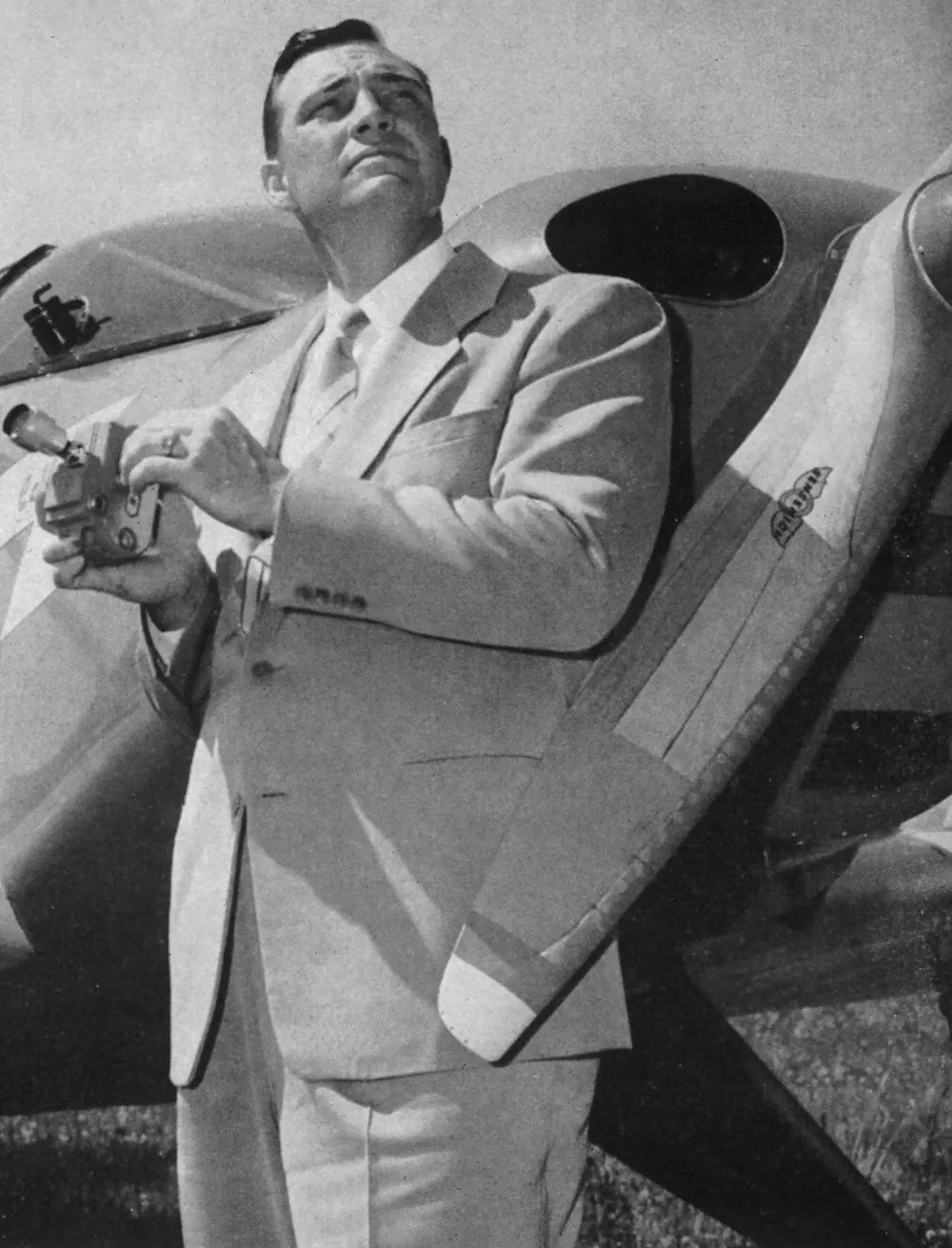
Frederick Valentich was a 20-year-old who held a private pilot’s licence and a class-four instrument rating, which allowed night flying only in clear, visual conditions. According to later accounts of his record, he had about 150 flying hours, had twice been turned down by the Royal Australian Air Force, belonged to its Air Training Corps and was struggling with his commercial-licence exams. His father, Guido Valentich, said he was a keen believer in UFOs who worried about being attacked by them.
On Saturday, October 21, 1978, he rented a Cessna 182L, registered VH-DSJ, at Moorabbin Airport and filed a night flight plan to King Island, in Bass Strait, by way of Cape Otway, estimating 69 minutes each way. He gave the reason as collecting friends; he reportedly told others it was a crayfish run. Investigators later found neither account to be true.
What was reported
The aircraft left Moorabbin at about 6:19 p.m. and reported over Cape Otway at 7:00 p.m. At 7:06 p.m. Valentich asked Melbourne Flight Service whether there was any known traffic below 5,000 feet. The reply, twelve seconds later, was that there was none. Over the next six minutes, according to the Department of Transport’s transcript, he described a large aircraft with four bright lights that had passed at least a thousand feet above him and seemed to him to be ‘playing some sort of game’. He then said the object appeared stationary, was orbiting above him, and had a green light and a shiny, metallic surface.
Asked his intentions, he replied that he was continuing to King Island and that the ‘strange aircraft’ was hovering over him again. He also reported that his engine was running roughly. His last description of the object was ‘it is hovering and it’s not an aircraft’. After the controller called him, he answered only with his call sign, ‘Delta Sierra Juliet Melbourne’, followed by 17 seconds of open-microphone sound that accounts describe as metallic or scraping; that last transmission was logged at 7:12:28 p.m. The alert phase of the search-and-rescue plan began at 7:12 p.m., and when the Cessna did not reach King Island the distress phase was declared at 7:33 p.m.
Investigations and official findings
An air, sea and land search continued until October 25, 1978. According to Wikipedia’s account, it involved an RAAF Orion and eight civilian aircraft and covered more than 1,000 square miles (about 2,600 square kilometers). It found no trace of the aircraft or its pilot. The Department of Transport’s Aircraft Accident Investigation Summary Report, dated April 27, 1982, ended with the finding that the reason for the disappearance had not been determined. Valentich was presumed to have died.
The weather at Cape Otway was clear, with excellent visibility and light winds. The aircraft was never plotted on radar. In 1983 an engine cowl flap was found washed ashore on Flinders Island, and the Bureau of Air Safety Investigation said it came from a Cessna 182 within a serial-number range that included VH-DSJ. A second departmental file, closed until June 2012 and then obtained under Freedom of Information by Australian researcher Keith Basterfield, records that search aircraft sighted an oil slick and wreckage on the sea but could not find them again. According to researcher David Clarke’s summary, neither the cowling nor the slick was conclusively linked to the aircraft.
Explanations and debate
According to an Associated Press report at the time, some Department of Transport officials speculated that Valentich had become disoriented and was flying upside down, mistaking his own lights reflected in the water, or lights on a nearby island, for another aircraft. In Skeptical Inquirer in 2013, astronomer James McGaha and investigator Joe Nickell argued that a computer sky search showed Venus, Mars, Mercury and the star Antares in a vertical diamond that could be read as a ‘long shape’. They suggested the green light was the Cessna’s own wing light, and that a tilted-horizon illusion over dark water led Valentich into a tightening ‘graveyard spiral’. They argued that the rising G-forces of a tightening spiral would cut fuel flow and make the engine run rough, and noted that the plane’s gravity-fed fuel system could do the same if it turned upside down. Brian Dunning of Skeptoid also favored disorientation, adding speculation that Valentich might have been imitating a scene from the film Close Encounters of the Third Kind.
The Tasmanian Aviation Historical Society notes that others have proposed a staged disappearance. That theory points to the unexplained flight purpose, the fuel on board for about 800 kilometers, the lack of radar contact and police reports of a light aircraft landing near Cape Otway that night. According to a 2012 report in Adelaide’s Advertiser, as summarized by Wikipedia, ufologist Keith Basterfield said interviews with doctors and colleagues who knew Valentich had all but ruled out suicide. Ufologists, and Guido Valentich, who hoped his son had been taken, have favored a UFO destroying or abducting the aircraft. An anonymous farmer’s claim, made 36 years later, has not been verified.
Why it still matters
Neither the pilot nor the aircraft has ever been found, so the case rests on about six minutes of recorded speech and a thin trail of paperwork. That is why skeptics cite it as a likely case of spatial disorientation over water at night, while UFO writers count it among the most puzzling aviation cases. Clarke quotes Australian researcher Bill Chalker as saying that ‘nobody really knows what happened’. His father, who joined a Victorian UFO research group hoping his son had been taken, died in 2000.
Sources
- Tasmanian Aviation Historical Society: Mysteries of Aviation — Frederick Valentich and VH-DSJ, 2020 archived
- Skeptical Inquirer: The Valentich Disappearance — Another UFO Cold Case Solved, 2013 archived
- Dr David Clarke: Flight into Oblivion, 2012
- Skeptoid: The Disappearance of Frederick Valentich, October 22, 2013 archived
- Plane & Pilot: Strange Lights Before Cessna 182 Goes Missing, November 23, 2020 archived
- Fear of Landing: The Alien Abduction of Frederick Valentich, May 2, 2014 archived
- Wikipedia: Disappearance of Frederick Valentich archived