The Betty and Barney Hill Case

- On the night of September 19–20, 1961, Betty and Barney Hill said a bright, erratically moving light followed their car along U.S. Route 3 through the White Mountains. Barney said he watched a lit craft and several figures through binoculars.
- The couple said a beeping sound followed, after which they found themselves about 35 miles farther south with roughly two hours unaccounted for. They reported a torn dress, a broken binocular strap and shiny spots on the car’s trunk.
- The Air Force carried the case as ‘insufficient data’; a 1963 Blue Book statement said the actual light source was not known, yet also that the object was ‘in all probability Jupiter’. In 1963–64 Boston psychiatrist Benjamin Simon hypnotized the couple, who then described being taken aboard and examined, and Betty drew a ‘star map’.
- Simon thought the abduction part was most likely a dream of Betty’s that Barney absorbed, though, according to Webb, he said he could not prove it. Skeptics also cite Jupiter, a light on Cannon Mountain and unreliable hypnotic memory, while the Hills’ supporters stand by the account.
Key witnesses: Betty Hill (social worker), Barney Hill (postal worker), Maj. Paul W. Henderson (Pease AFB, who prepared the Air Force report by phone), Dr. Benjamin Simon (hypnotist-psychiatrist)
Status: DEBATED
Background
Betty Hill, a social worker for New Hampshire’s Health and Welfare Department, and Barney Hill, a postal worker active in the state NAACP, lived in Portsmouth. They had married in 1960 and were an interracial couple in the civil rights era. On the night of September 19, 1961, they were driving home from a vacation in Canada along U.S. Route 3. According to the NICAP investigator Walter Webb, the sky was clear, with a gibbous Moon and the planet Jupiter low in the sky.
What was reported
According to the Hills, they noticed a bright, star-like light near the Moon after leaving Colebrook around ten o’clock. Betty watched it through binoculars as it seemed to move in step-like jerks; Barney, who was driving, first took it for an airliner. Near Franconia Notch it passed behind Cannon Mountain, and south of Indian Head, Webb’s report says, it descended to perhaps 80 to 100 feet above the ground, no more than a few hundred feet away. Barney said he stopped, stepped out and saw through the binoculars a row of windows and several figures, one of whom he called the ‘leader’.
The couple said they then heard a beeping sound, fell into a daze and found themselves about 35 miles farther south, near Ashland, with a stretch of road they could not recall. They reached Portsmouth after 5 a.m. Barney’s binocular strap had broken, and the next morning they found shiny spots on the car’s trunk that made a compass needle spin. Betty’s dress was torn, and she later reported a pinkish powder on it.
Investigations and official findings
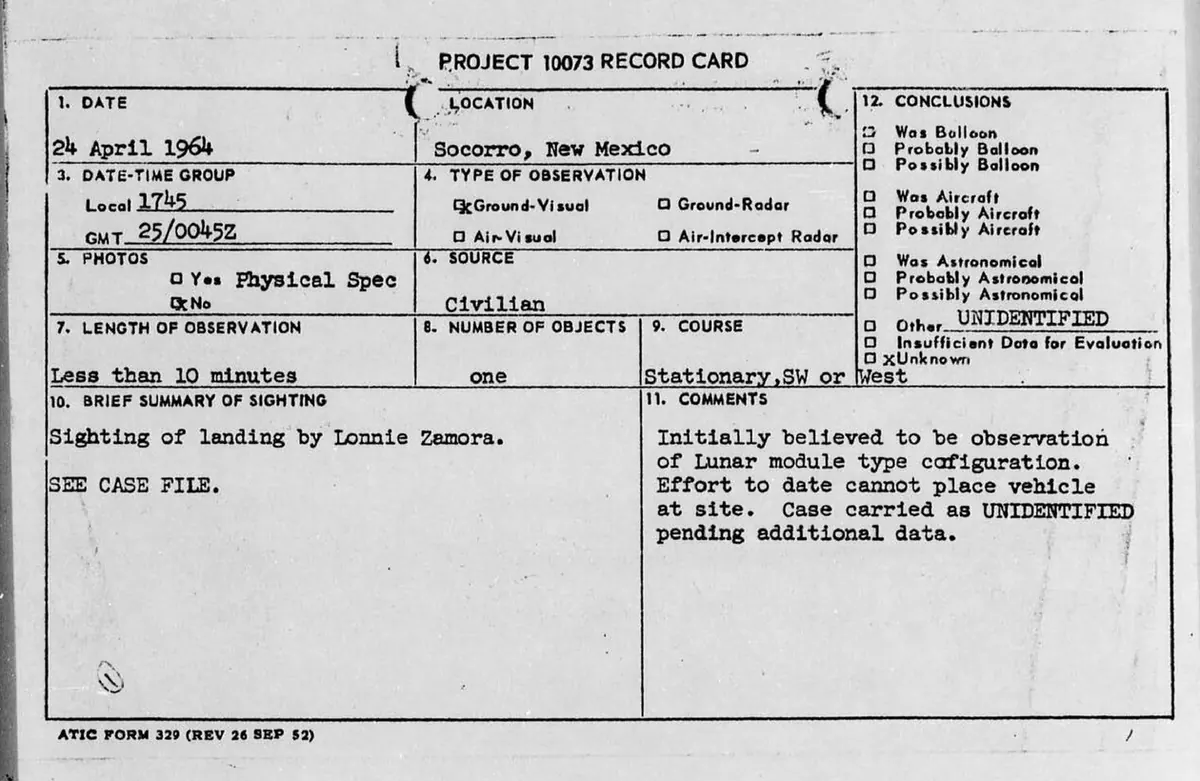
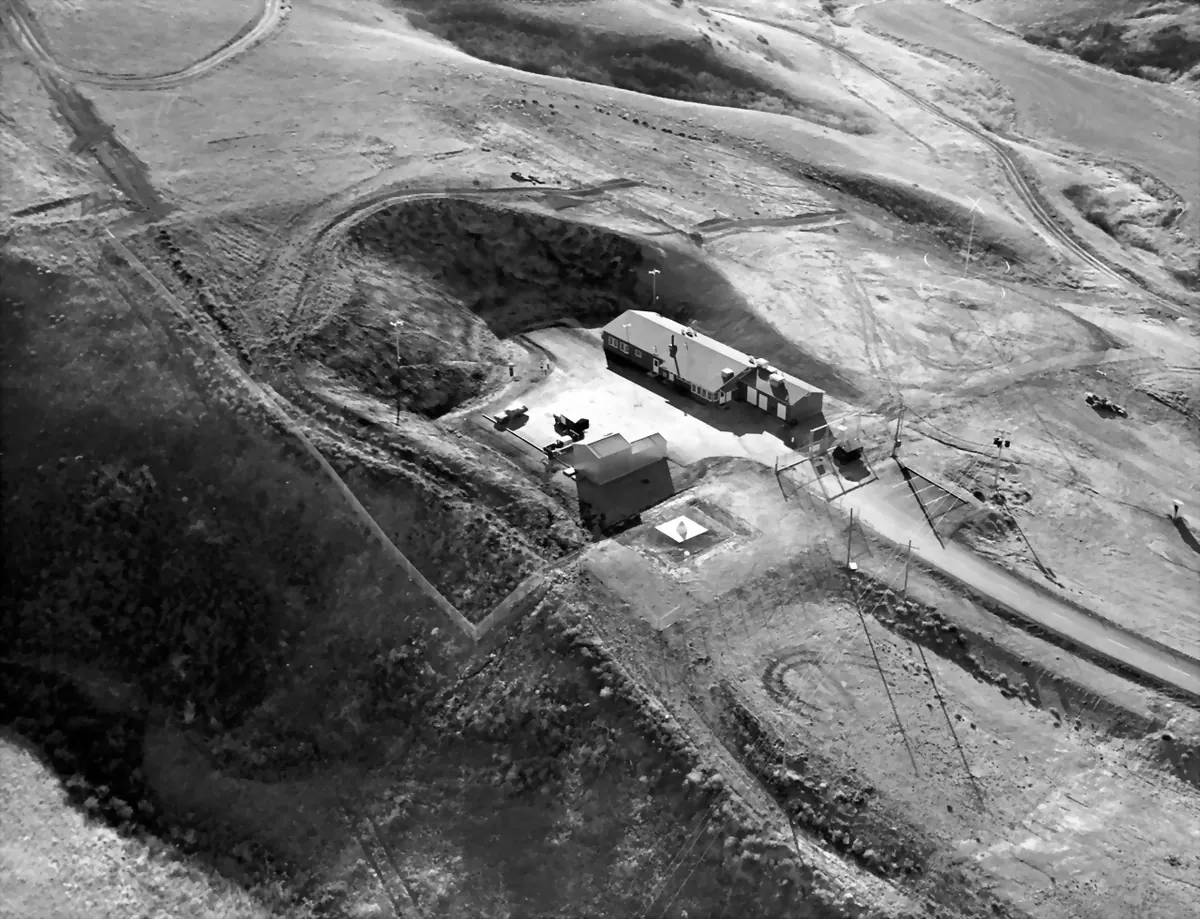
Betty telephoned Pease Air Force Base the next day. Maj. Paul W. Henderson of the 100th Bomb Wing questioned the couple by phone and prepared Information Report No. 100-1-61, which describes a cigar-shaped band of lights with V-shaped ‘wings’ and red tips. It does not mention figures, and it says the observer’s reliability ‘cannot be judged’ and that, while his apparent honesty and seriousness appeared valid, they could not be judged at that time. A Project Blue Book statement dated September 27, 1963, said the case was carried as ‘insufficient data’, noted ‘inconsistencies in the report’ and a strong temperature inversion, and said Jupiter would have set about when the object disappeared. It said that ‘without positional data the case could not be evaluated as Jupiter’ and that ‘the actual light source is not known’, yet also that the object was ‘in all probability Jupiter’, and that no evidence had been presented of other than natural causes. An Air Command and Staff College study later noted that Pease precision approach radar logged an unidentified target at 2:14 a.m., about two hours after the sighting, which the control tower could not see. Pease officials wrote that no relationship between the two could be determined, Blue Book’s record card put the radar return down to a ground target seen through a strong inversion, and the study complained that Blue Book never followed up the possible link.
Webb, who interviewed the Hills for six hours on October 21, 1961, judged them truthful and called the Jupiter reply wrong, since the Hills said they saw both at once. From December 1963 the couple saw Boston psychiatrist Benjamin Simon, who hypnotized them separately. Under hypnosis they described being taken aboard and examined, and Betty said she was shown a star map. According to Webb, Simon accepted that they had seen a craft of some sort, though he preferred an earthly aircraft, conventional or classified, to a spacecraft, and he thought the abduction was Betty’s dream, absorbed by a suggestible Barney. The story reached the public through the Boston Traveler on October 25, 1965, and John G. Fuller’s book The Interrupted Journey followed in 1966.
Explanations and debate
Skeptics have proposed several mundane sources. Besides Jupiter, an aircraft warning beacon on Cannon Mountain has been suggested by a local resident, Jim Macdonald, who said it appears and disappears as the Hills described. Robert Sheaffer argues that Betty’s sketch of the Moon and planets shows that her ‘Jupiter’ was really Saturn and her ‘craft’ was Jupiter, and after reading Macdonald’s reconstruction, he called the Hills the ‘poster children’ for not driving when sleep deprived. The Air Force’s own handling has also drawn criticism: the Air Command and Staff College study judged the investigation ‘at best’ shallow and incomplete.
Others focus on the hypnosis. According to Webb, Simon thought Barney had heard Betty recount her dreams repeatedly, and the Skeptoid writer Brian Dunning notes that the Hills’ hypnosis began more than two years after the event. Researchers Joseph Green and Steven Jay Lynn found in a 2001 study of 96 students that hypnosis did not improve memory accuracy. Martin Kottmeyer suggested Barney’s ‘wraparound eyes’ drew on an Outer Limits episode aired twelve days before his session; asked about the series, Betty said she had never heard of it. Marjorie Fish concluded that Betty’s star map matched Zeta Reticuli, but Carl Sagan and Steven Soter argued the match was chance, and later Hipparcos data placed some of her stars much farther away; Fish herself later rejected her hypothesis.
Why it still matters
In 2011 New Hampshire put up a historical marker in Lincoln that describes the case as ‘the first widely-reported UFO abduction report in the United States’, though Michael Stevens, who petitioned for the marker, said the state’s Division of Historical Resources was clear that it was not necessarily backing that the event happened. Barney died in 1969 and Betty in 2004, and the University of New Hampshire holds their papers. Historians such as Matthew Bowman read the story partly through the stress of the couple’s interracial marriage during the civil rights era. For believers, it shows two credible witnesses and an unexplained sighting; for skeptics, how memory, suggestion and publicity can shape a story.
Sources
- NICAP (Walter N. Webb): The Hill Case, September 19–20, 1961, 1965 report archived
- Wikipedia: Barney and Betty Hill incident archived
- Skeptoid: Betty and Barney Hill, the original UFO abduction archived
- Air Command and Staff College study via NICAP: Should the USAF Reopen Project Blue Book? archived
- Boston Public Library: The Abduction of Betty and Barney Hill archived
- Literary Hub (David J. Halperin): The Moment the Myth of Alien Abduction Was Born, March 26, 2020 archived
- Robert Sheaffer, Bad UFOs: Dr. Simon Reveals his Real Thoughts on the Hill ‘UFO Abduction’ Case, December 23, 2015 archived
- Ohio State University News: Hypnosis may give false confidence in inaccurate memories, 2001 archived
- Fox News (AP): 50th anniversary of first UFO abduction story, September 19, 2011 archived