The Arnold Sighting
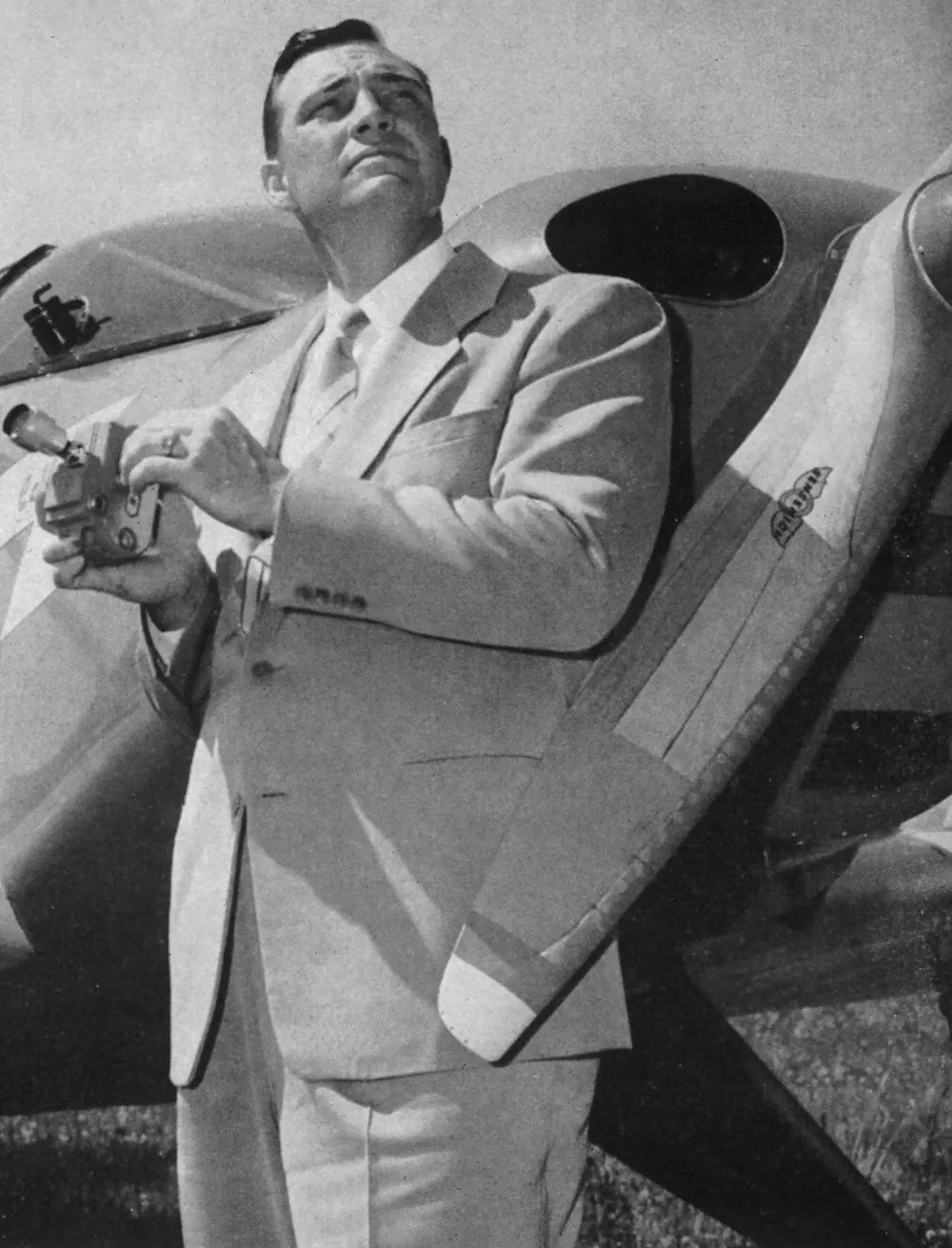
- At about 3 p.m. on June 24, 1947, pilot Kenneth Arnold, searching for a missing Marine plane, says a flash lights up his CallAir and he sees nine shiny objects in a chain north of Mount Rainier.
- He says they weave among the peaks like geese in a line, and he times them from Mount Rainier to Mount Adams in 1 minute 42 seconds, a figure that works out to roughly 1,700 mph. Newspapers turn his saucer-skipping comparison into ‘flying saucers’.
- Army Air Forces intelligence officers interview him and one writes that Arnold ‘actually saw what he stated that he saw’. Project Blue Book later files the case as ‘Other (MIRAGE)’, and a Blue Book chief writes that scientists found it a mirage.
- Skeptics have offered snow, clouds, meteors, mirages and even pelicans, while Arnold rejected mirages and reflections. The National Air and Space Museum says what he saw ‘remains unexplained’.
Key witnesses: Kenneth Arnold (private pilot and Boise businessman)
Status: DEBATED
Background
On June 24, 1947, Kenneth Arnold, a 32-year-old Boise businessman and private pilot, left Chehalis, Washington, in a single-engine CallAir bound for Yakima. According to his later report to the Army Air Forces, he had just finished work for Central Air Service at Chehalis. On the way he detoured to look for a Marine Corps transport plane thought to have gone down on the southwest side of Mount Rainier, which carried a $5,000 reward.
The air was so smooth, he said, that flying was a pleasure. The term ‘flying saucer’ was not yet in popular use, and the military had no office devoted to unidentified aircraft.
What was reported
In his written report, Arnold said a bright flash lit up his aircraft shortly before 3 p.m. North of Rainier he saw a chain of nine objects at about 9,500 feet, close to his own altitude of about 9,200 feet, heading south-southeast. At first he took them for jets, but he could find no tails. He said they flew like geese in a diagonal line, weaving among the peaks, with two or three dipping every few seconds to flash in the sun. He put them 20 to 25 miles away and somewhat smaller than a DC-4 airliner.
He timed the chain from Mount Rainier to Mount Adams, roughly 47 miles, at 1 minute 42 seconds, which works out to 1,659 miles per hour. After landing in Pendleton, Oregon, he told local reporters his story. The East Oregonian ran it on June 25 under the headline ‘Impossible! Maybe, But Seein’ Is Believin’, Says Flyer’. A follow-up described the objects as flat like a pie pan and gave a more cautious speed of about 1,200 mph, with an error of 200 to 300 mph.
Arnold said that the saucer comparison described how the objects moved, like a saucer skipped across water, rather than their shape. Newsmen shortened his description to ‘flying saucers’, according to Quintanilla, and the phrase became the popular name for UFOs. Arnold said he watched the objects for roughly two and a half to three minutes and drew a sketch of them for the Army, labeling them ‘Mirror Bright’.
Investigations and official findings
Army Air Forces intelligence took the report seriously. On July 12, 1947, two Fourth Air Force intelligence officers from Hamilton Field, Lt. Frank M. Brown and Capt. William Davidson, interviewed Arnold. Brown’s memo of July 16 gave his ‘personal opinion’ that Arnold ‘actually saw what he stated that he saw’ and said that, after checking an aeronautical map of the area, Arnold’s statements on distances, speed and course could very possibly be facts. It also noted Arnold’s bitterness that officials had not looked into the matter sooner.
Former Blue Book chief Edward Ruppelt wrote that analysts at the Air Technical Intelligence Center split. One group believed Arnold had seen ordinary jets and misjudged them; another believed he knew the terrain and his speed was about right. The center concluded the phenomena were real, and Project Sign began under a December 30, 1947 directive from the Chief of Staff.
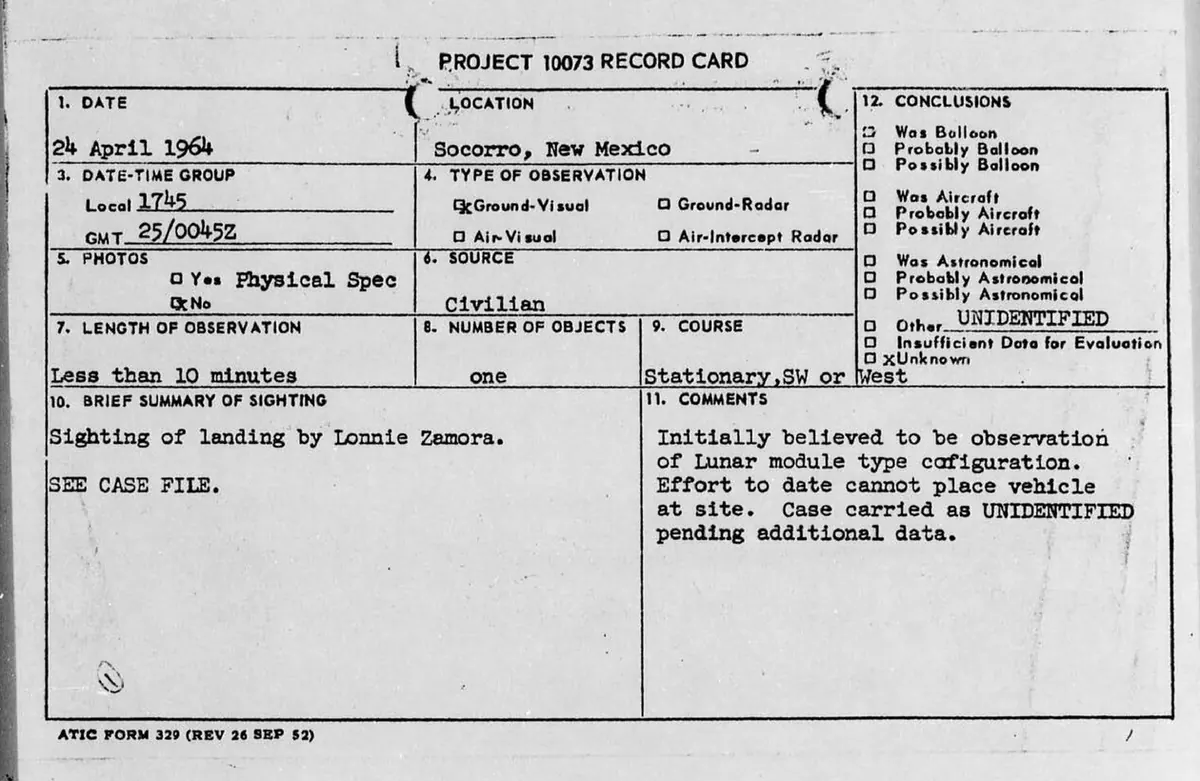
Project Blue Book’s index card, as reproduced on a UFO research site, lists the case as ‘Other (MIRAGE)’. A 1966 article by Blue Book’s last chief, Hector Quintanilla, in the CIA’s Studies in Intelligence said scientists who reviewed the sighting concluded it was a mirage, citing the very stable, clear air Arnold described.
Explanations and debate
Other skeptics have offered different answers. According to Wikipedia’s summary, astronomer Donald Menzel suggested blowing snow, then wave clouds, then water spots on the cockpit windows; Philip Klass suggested he may have seen meteors, citing a San Francisco Examiner article by Keay Davidson; Steuart Campbell argued for mirages of snow-capped peaks; and James Easton proposed white pelicans. Ruppelt recorded that an expert answered the snow idea with a flat ‘Impossible’, saying it was impossible to get powder snow low in the mountains in June.
Arnold rejected reflections and mirages in his report, saying he watched through an open window, and wrote that he was ‘convinced in my own mind that they were some type of airplane’. His daughter, Kim Arnold, said in a 2017 East Oregonian story that he wanted answers and spoke out partly because he feared the Soviet Union had faster aircraft.
Cautions cut both ways. Ruppelt noted that parts of Arnold’s later book do not match what the official files say he told the Air Force, and Quintanilla described the sighting as ‘one man’s subjective interpretation’ that could not be reproduced. The National Air and Space Museum states that whatever Arnold saw ‘remains unexplained’.
Why it still matters
The sighting is the usual starting point of the modern UFO era. Quintanilla wrote that Arnold’s publicity ‘started an avalanche of other sightings’, and the Air & Space Forces Magazine writer John Correll writes that 850 more were reported within six weeks. Correll writes that the Pentagon, fearing a Soviet reconnaissance craft, had Air Force intelligence investigate; the effort began as Project Sign and became Blue Book, which closed in 1969 with 701 of 12,618 cases listed as unidentified.
It also shows how language travels. A pilot’s comparison to a skipped saucer became the name of a whole subject. Kim Arnold says the family received about 10,000 letters afterward and that her father expected the military to explain what he saw, which she says never happened.
Sources
- CIA Studies in Intelligence: The Investigation of UFO’s (Hector Quintanilla), Fall 1966 archived
- Arnold’s July 1947 report to the Army Air Forces (Patrick Gross archive) archived
- Smithsonian National Air and Space Museum: 1947, Year of the Flying Saucer, June 24, 2022 archived
- Edward J. Ruppelt: The Report on Unidentified Flying Objects, ch. 2, 1956 (Patrick Gross archive) archived
- Army counterintelligence memo (Lt. Frank M. Brown) on the Arnold interview, July 16, 1947 (Project 1947) archived
- Project Blue Book index card for the Arnold case, June 24, 1947 (Patrick Gross archive) archived
- Military Times (AP/East Oregonian): Flying saucers still evasive 70 years after pilot’s report, June 25, 2017 archived
- Air & Space Forces Magazine: USAF and the UFOs (John T. Correll), June 1, 2011 archived
- Wikipedia: Kenneth Arnold UFO sighting archived