The Lubbock Lights

- At about 9:20 p.m. on August 25, 1951, four Texas Tech professors (three in some accounts) sitting in a back yard say a formation of fifteen to thirty bluish-green lights streaks silently across the sky. They report more flights in the following weeks.
- On the night of August 30 (Ruppelt’s book says August 31), student Carl Hart Jr. says he photographs a V of lights passing over his yard. The pictures run in the local paper and then nationally, and Life magazine features the case in April 1952.
- Air Force investigator Edward Ruppelt finds the photos ‘never proven to be a hoax’ and not proven genuine. His early theory was that plovers were reflecting the city’s mercury-vapor street lamps; Menzel and Boyd later wrote that a 1959 Air Force reanalysis confirmed plovers, while an unsigned file report favored ducks.
- The professors say the photos do not match what they saw, and the later explanations (plovers, ducks, even moths) differ from one another. Hart reportedly said decades later that he still did not know what he had photographed.
Key witnesses: Four Texas Tech professors (W. I. Robinson, A. G. Oberg, W. L. Ducker, and a Dr. George), Carl Hart Jr. (photographer), hundreds of Lubbock-area residents
Status: PARTIALLY EXPLAINED
Background
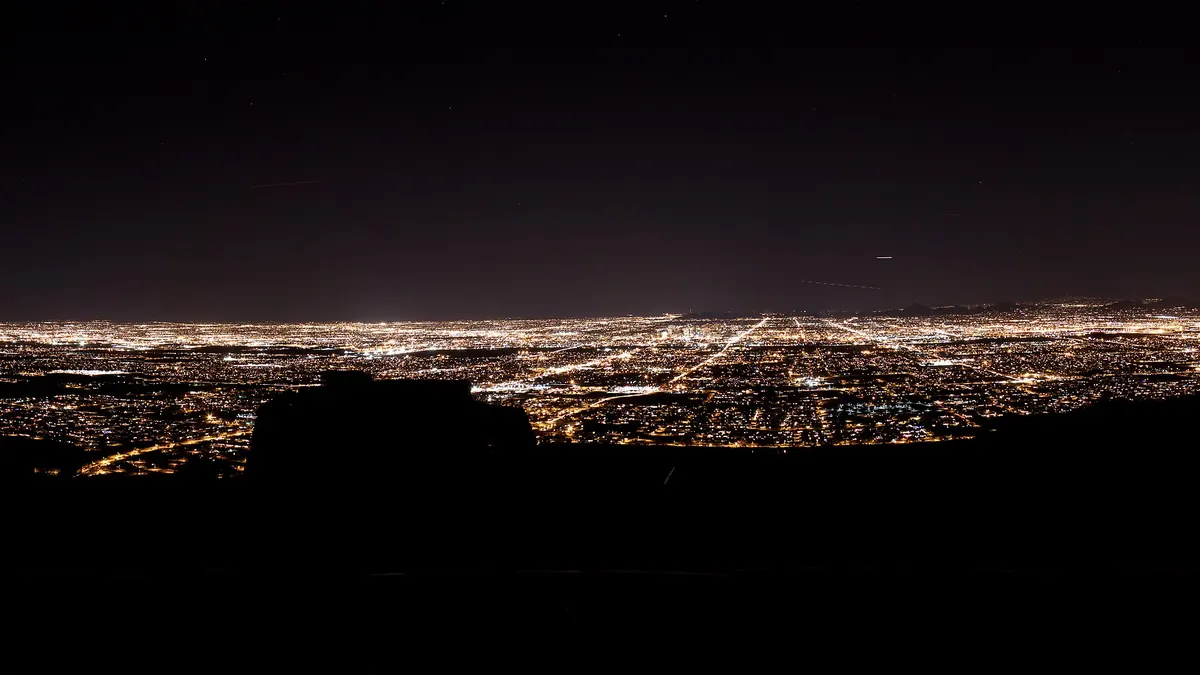
Lubbock, a West Texas city, was home in 1951 to Texas Technological College and to Reese Air Force Base. The city had recently lit several main boulevards with bluish mercury-vapor street lamps, a detail that later became central to the explanations.
Saturday, August 25, 1951, was a hot, clear night, and several college professors were sitting in a geology professor’s back yard talking about micrometeorites. Their sighting, and the newspaper story that followed, set off weeks of reports across the region.
What was reported
According to Ruppelt’s 1956 account, four Texas Tech professors (Menzel and Boyd, working from the Air Force files, say three), among them geologist W. I. Robinson, chemical engineer A. G. Oberg and petroleum engineer W. L. Ducker, saw a formation of fifteen to thirty bluish-green lights cross the sky from north to south at about 9:20 p.m. A second group appeared roughly an hour later, and the men said they logged a dozen or more further flights over the next weeks. They timed the lights at about 30 degrees of sky per second, but two teams stationed with radios to measure altitude never saw them. A Lubbock paper ran the first account on August 26, and hundreds of residents later said they had seen similar lights, though Ruppelt noted that very few claimed to have seen them before reading the professors’ story in the paper.
On the night of August 30, 1951 (the date on the Blue Book file; Ruppelt’s book gives August 31), Carl Hart Jr., a Texas Tech freshman, said he was lying in bed beside an open window when a V-shaped formation crossed his yard. He grabbed a 35-mm Kodak, went outside and took five exposures over two later passes. The Lubbock newspaper bought the pictures after some hesitation, and they spread nationally. Other reports were folded into the same file, including a silent, swept-wing craft with paired bluish lights near Albuquerque, a ‘pear-shaped’ object reported by two women near Matador, and a radar return in Washington State.
Investigations and official findings
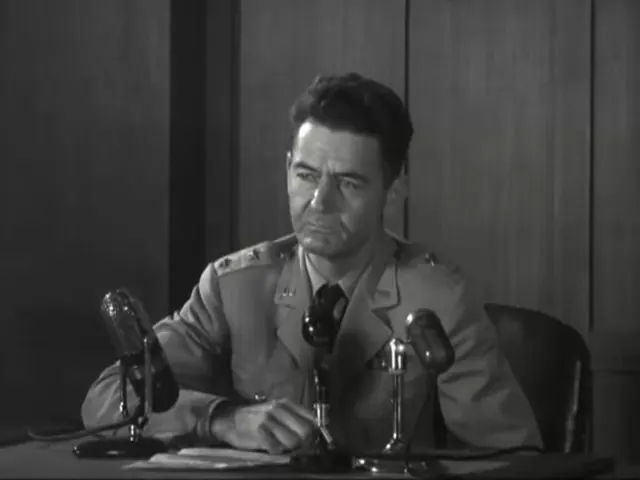
Edward Ruppelt, the Air Force intelligence officer then running Project Grudge (renamed Project Blue Book in 1952), flew to Lubbock and interviewed the professors and Hart. The Air Force’s Photo Reconnaissance Laboratory at Wright Field examined four surviving negatives, which were scratched and dirty from handling. It found real images of near-pinpoint lights that registered on the film far more strongly than the stars; although the night was clear, no stars showed in the frames. It could not determine their size, speed or altitude. Ruppelt’s statement to the press was that the photos ‘were never proven to be a hoax but neither were they proven to be genuine.’
The professors themselves said the pictures did not match what they had seen: they had described a soft glow and loose groups, not a crisp V of bright lights, and Ruppelt wrote that they were firmly convinced the photos were of ‘home manufacture’. Ruppelt’s early lead was that the lights were birds, specifically plovers, reflecting the mercury-vapor lamps. A witness in a nearby town (an elderly man in Lamesa in Ruppelt’s account; a Brownfield rancher in Menzel and Boyd’s) said he had identified plovers by their call, and a federal game warden said plovers rarely fly in flocks that large, though ducks might. In his 1956 book Ruppelt wrote that he had once favored birds ‘but I was wrong’. He declared the professors’ lights ‘positively identified’ as a natural phenomenon but said he had promised the scientist who solved it anonymity. Officially, apart from the radar target, which ATIC blamed on weather, the sightings stayed listed as unknowns.
Explanations and debate
Later explanations pull in different directions. In a chapter added to the 1960 edition of his book, Ruppelt said the lights had been night-flying moths reflecting the lamps. Astronomer Donald Menzel and Lyle Boyd wrote in 1963 that an Air Force reanalysis in 1959 by Major R. J. Friend and consultant J. Allen Hynek had concluded the lights were plovers. A declassified, unsigned report thought to date from 1959 or later reportedly named migratory birds, probably ducks. Menzel had earlier proposed refracted city lights.
The photographs remain separate. Ruppelt’s own test with the same model of camera produced only two badly blurred frames in four seconds, though other experts said a photographer practiced at panning, as Hart reportedly was from shooting sports for the paper, would show much less blur. Menzel and Boyd noted that the V kept the same orientation in every frame, which they judged hard to square with Hart’s account of panning with the lights, and that the Lubbock newspaper’s own photographer failed to record birds that bright. Researcher Donald Burleson argued in 2001 that enhanced images showed structure beneath the lights, a claim resting on his own processing. More than forty years on, Hart reportedly told researcher Kevin Randle he still did not know what he had photographed.
Why it still matters
Ruppelt called the case one of the most thoroughly investigated in the Air Force’s files, with some of the most precise data it ever received. Yet it was never settled to everyone’s satisfaction. Life magazine featured it in April 1952, and the phrase ‘Lubbock Lights’ became shorthand for the classic mass sighting that has both a plausible mundane explanation and an unresolved photograph. A Lubbock news site says its name partly honors it.
Sources
- Edward Ruppelt, The Report on Unidentified Flying Objects (1956) archived
- History.com: The unsolved mystery of the Lubbock Lights UFO sightings archived
- Wikipedia: Lubbock Lights archived
- Menzel and Boyd, The World of Flying Saucers (1963; Project Gutenberg): The Lubbock Lights
- Project Blue Book file, Lubbock, Texas, August 30, 1951, four photographs (via Wikimedia Commons) archived
- Donald R. Burleson, International UFO Reporter: New Findings on the Lubbock Lights, 2001 (NICAP archive) archived
- Lubbock Lights (news site): Edward Ruppelt and the Lubbock Lights, October 31, 2024 archived