The Kaikōura Lights
- In the early hours of December 21, 1978, Safe Air pilots Vern Powell and Ian Pirie report strange lights near their Argosy freighter off the Clarence River. Wellington radar operators say they see returns too.
- On December 31, a Melbourne Channel 0 crew with reporter Quentin Fogarty and cameraman David Crockett flies the same coast. They film a bright light that, they say, follows the plane, and the aircraft’s radar shows a target in the same direction.
- The RNZAF concludes that ‘natural but unusual’ phenomena, among them a bright Venus, odd radar returns and the lights of a squid fleet, explain the reports. The Defence Force says the aircrews were reluctant to accept that they had seen Venus.
- Optical physicist Bruce Maccabee judges the filmed light too bright for a squid boat. Former government scientist Bill Ireland later argues that the footage shows a small group of squid boats about 6 km away. The pilots and radar controller say the explanations do not fit.
Key witnesses: Capt. Bill Startup, Bob Guard (pilots), Quentin Fogarty, David Crockett, Dennis Grant, John Cordy (radar controller), Vern Powell, Ian Pirie
Status: DEBATED
Background
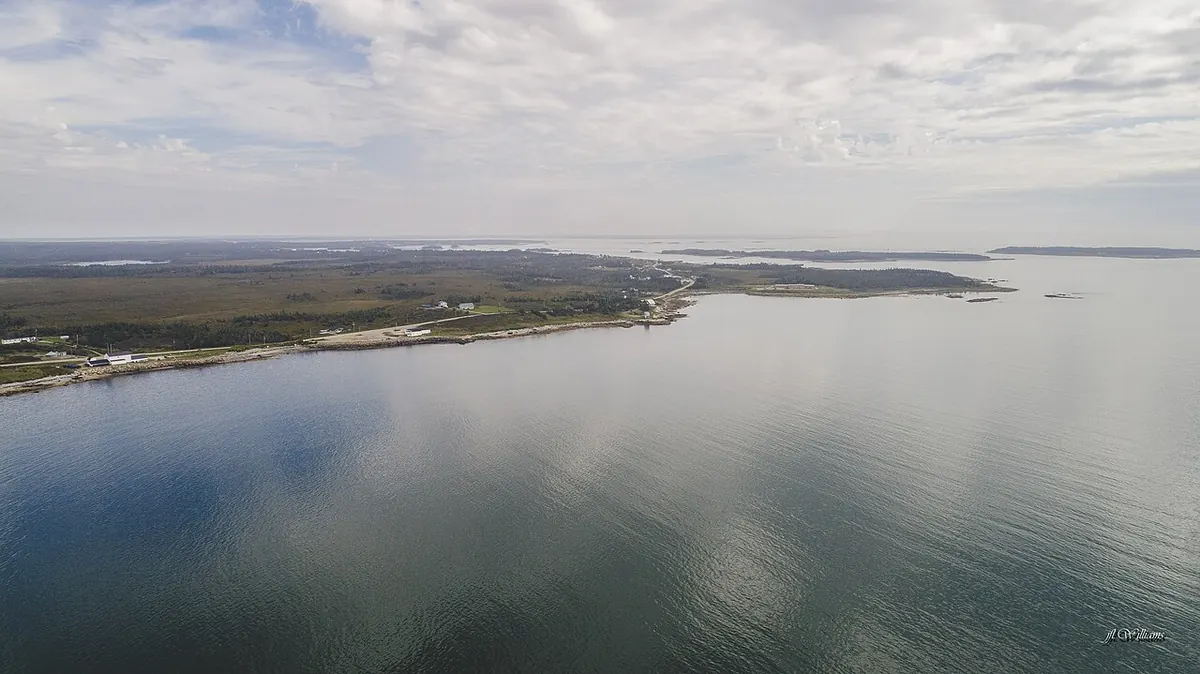
In late December 1978 Safe Air Ltd ran night freight flights carrying newspapers and cargo along the east coast of New Zealand’s South Island, using Armstrong Whitworth Argosy turboprops. The coast between Blenheim and Christchurch passes the Clarence River mouth and the Kaikōura Peninsula. Public interest in UFOs was high in Australasia that year; in October Frederick Valentich had disappeared over Bass Strait while reporting an unknown aircraft.
The episode began with a routine cargo run.
What was reported
According to the Defence Force files, the first incident came in the early hours of December 21. One Safe Air crew saw lights off the Clarence River shortly before 2 a.m. Wikipedia names the pilots, Vern Powell and Ian Pirie, flying from Blenheim to Christchurch, and says they saw “a series of strange lights” around their aircraft, and Wellington air traffic control reported radar returns in the same area. On the return leg the crew reported lights again at about 4 a.m., in rectangular patterns. Wellington radar operator John Cordy later said the targets tracked the aircraft for 20 to 30 miles (in a 2017 interview; in his book he gave forty miles).
News of the sightings reached Melbourne’s Channel 0, which arranged for reporter Quentin Fogarty, then on holiday in Christchurch, to fly the Argosy route. Fogarty, freelance cameraman David Crockett and Crockett’s wife Ngaire, who handled sound, boarded the Argosy Merchant Enterprise on the night of December 30, flown by Bill Startup and Bob Guard. After the plane left Christchurch at 2:16 a.m. on December 31, with Dennis Grant of TV1 replacing Ngaire Crockett, the crew reported a bright round light about three minutes later and a radar target roughly 18 nautical miles away, although Wikipedia notes the radar was in ground-mapping mode, which can detect only objects below the aircraft. Crockett filmed it for several minutes. The crew said it seemed to move with the plane, and the tape records Fogarty saying ‘let’s hope they’re friendly’. The aircraft landed at Woodbourne, near Blenheim, at about 3 a.m. The footage ran on Melbourne television that night and then around the world.
Investigations and official findings
An RNZAF Orion flew a reconnaissance mission on January 2, 1979, and key witnesses were interviewed; Prime Minister Robert Muldoon is reported to have taken a close interest. The 1979 summary attributed the lights to ‘natural but unusual atmospheric phenomena’ and suggested lights from a fleet of squid boats or an unusually bright Venus, and the Wellington radar returns were later judged probably spurious.
Defence files released in December 2010 add detail. Wing Commander J. B. Clements wrote that almost all the sightings could be explained by natural but unusual phenomena. The Air Force listed freak propagation of radio and light waves, a bright Venus, anomalous Wellington radar returns, and the lights of squid boats, cars and trains. It said the aircrews ‘do not seem to be prepared to accept’ that they might have seen Venus, but also that it did not think they had seen a visitor from space. Separately, the Department of Scientific and Industrial Research (DSIR) told the United Nations in January 1979 that the objects were ‘UFOs until identified’ while judging an extraterrestrial explanation extremely unlikely.
Explanations and debate
Optical physicist Bruce Maccabee of the US Navy, who had the Channel 0 film and interviewed witnesses, concluded that the filmed light was extremely bright and about 20 metres or more across, which he considered unlikely for plasma or ball lightning. He also argued that the light was too intense for a single squid boat. Ireland’s article says Maccabee had also given a smaller figure, about 12 by 18 metres, which Ireland called an error. He wrote up his photometric analysis in Applied Optics. The DSIR disputed his figures and said squid boats, which Wikipedia describes as stationary, were the likeliest source. Maccabee rejected that, and the journal’s editor wrote that the discussion “now seems to be moving outside the realm of technical optics.”
Bill Ireland, a former DSIR scientist, argued in New Zealand Skeptic in 2000 that Maccabee had assumed the wrong lens setting. Using a 1982 BBC Horizon programme that included Crockett’s film, he estimated a range of about 6 km and said frames showed rows of lights matching the lamp rigs of roughly 25-metre squid boats. He also said the film had not been made available to DSIR scientists, which Wikipedia notes is at odds with a January 1979 DSIR briefing to the United Nations that discussed both Crockett’s and TV1’s films.
Witnesses rejected the ordinary explanations. Cordy said the radar returns were solid and not atmospheric effects. Crockett reported that Venus was barely visible through his camera, Powell questioned how squid boats could be near an aircraft at 13,000 feet, and Startup argued that the radar tracking did not match the proposals. Guard later said, ‘We didn’t know what the hell it was.’
Why it still matters
The Kaikōura lights combine professional aircrew, ground radar, a television crew and film, and they still divide specialists. Maccabee’s analysis and the witnesses’ statements keep the case open for some, while Ireland’s measurements give skeptics a specific, testable alternative. Maccabee said there was no evidence that squid boats were in the area, but other accounts say a squid fleet was working off the coast, and no record placing a boat at the exact spot has been cited here. The case also left a human cost, as Fogarty told the NZ Herald in 2018 that he was hospitalised for about two weeks after the story, and he still calls it ‘still unfinished business’.
Sources
- Wikipedia: Kaikōura lights archived
- Otago Daily Times: Air Force report explains Kaikoura ‘UFO sightings’, December 2010
- New Zealand Skeptic: Bill Ireland, Ghost Squid Boats in the Sky, November 1, 2000
- NZ Herald: Crew remember the day UFO was spotted over Kaikōura 40 years on, December 15, 2018 archived
- 1964 magazine: Laura Williamson, It’s a bird, it’s a plane, it’s a squid boat, Autumn 2024